




- sales/support
Google Chat:---
- sales
+86-0755-88291180
- sales01
sales@spotpear.com
- sales02
dragon_manager@163.com
- support
tech-support@spotpear.com
- CEO-Complaints
zhoujie@spotpear.com
- Only Tech-Support
WhatsApp:13246739196
- Purchase/Shipping/Refund
WhatsApp:13424403025
Modbus POE ETH Relay MQTT User Guide
Hardware Connection
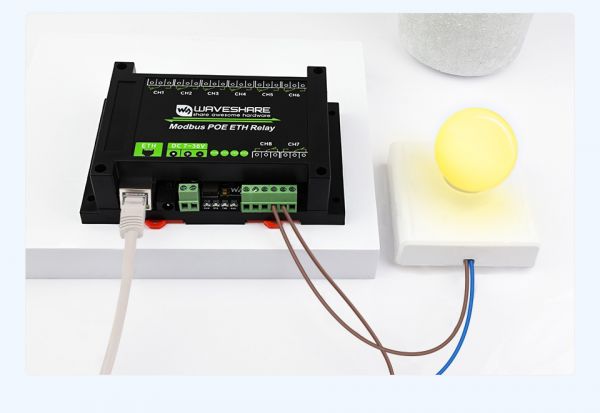
- Connect the Modbus POE ETH Relay to the LAN via a network cable and power it through the power port or through POE.
Software Preparation
Get Started to Communicate
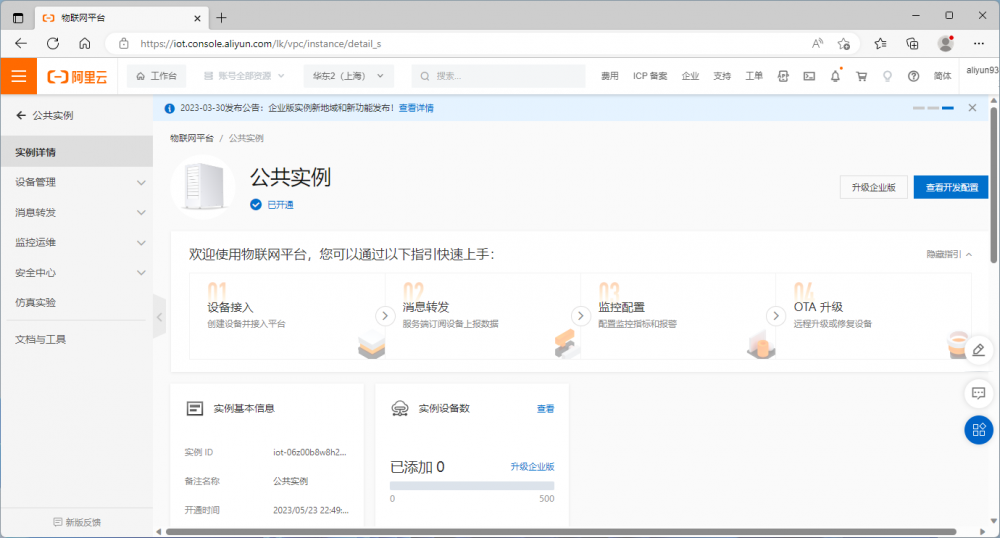
- Register an account to access the Alibaba Cloud IoT Platform and activate a public instance.
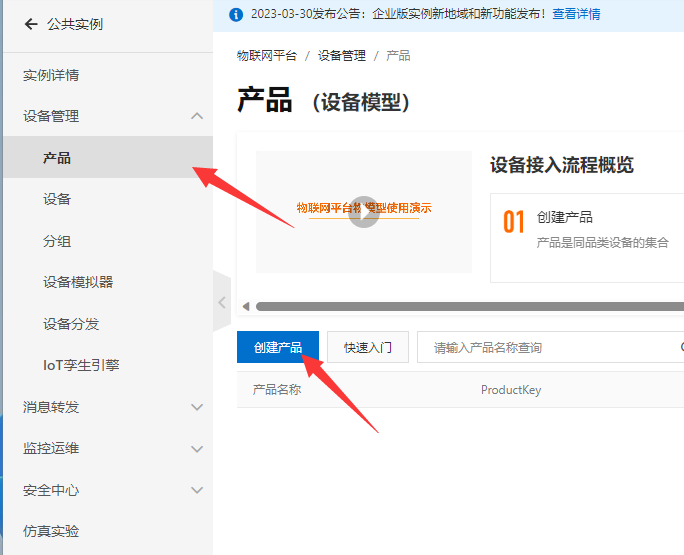
- Click Device Management -> Products -> Create a product, enter the product name, the example name is Waveshare, and choose a custom category to belong to. Other defaults are available.
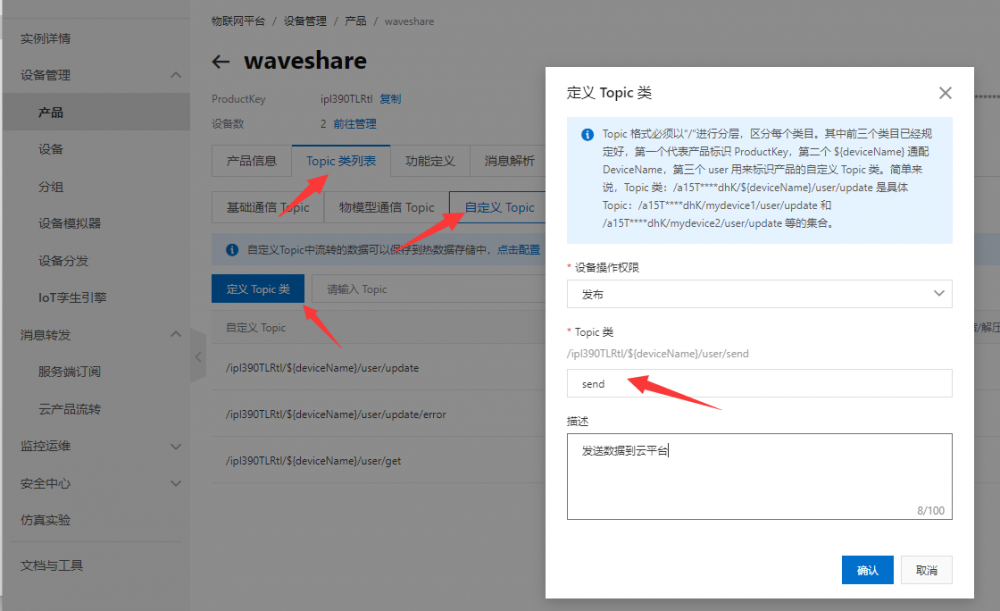
- After creating the product, click View Product Details below to enter the product page and select the Topic category list to go to the Topic page to add a custom topic.
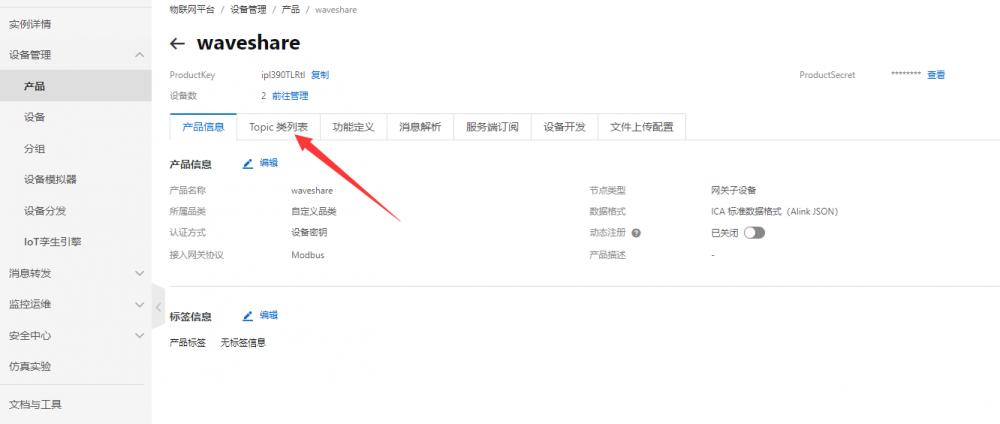
- Select Topic class list -> Custom Topic -> Define Topic class, create a publish topic send to send data.
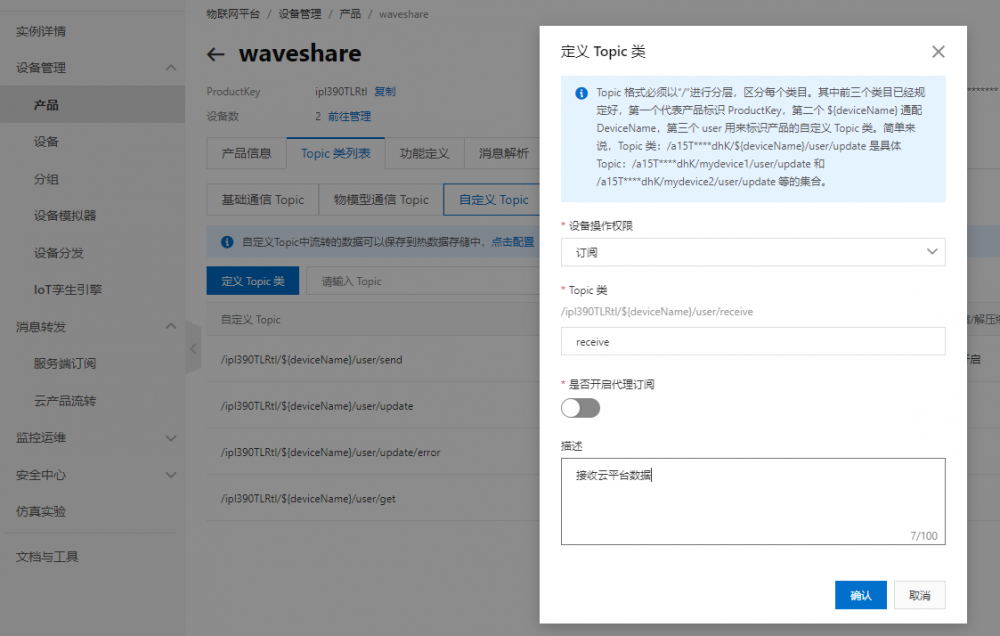
- To subscribe to a topic and receive data.
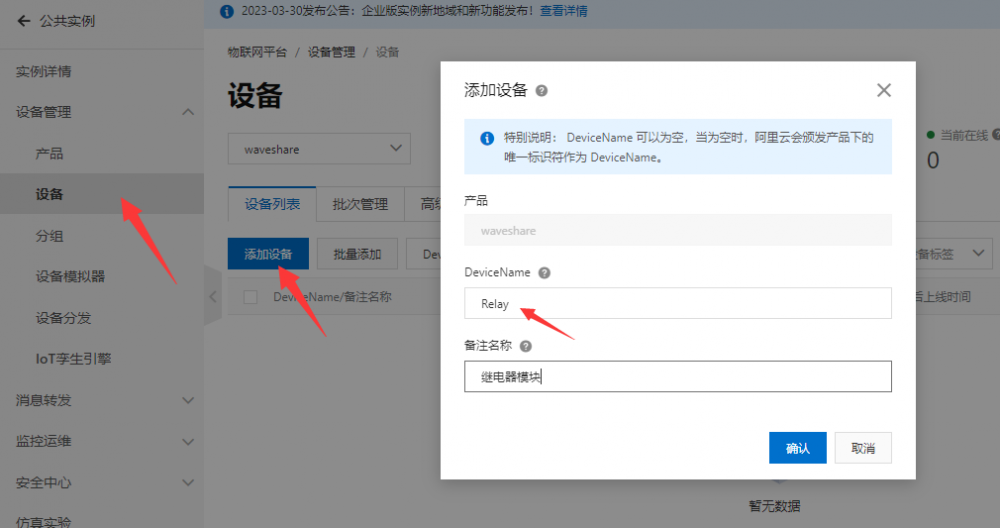
- Select Device Management -> Devices -> Add Device. Add a device named 'Relay', which is a relay module.
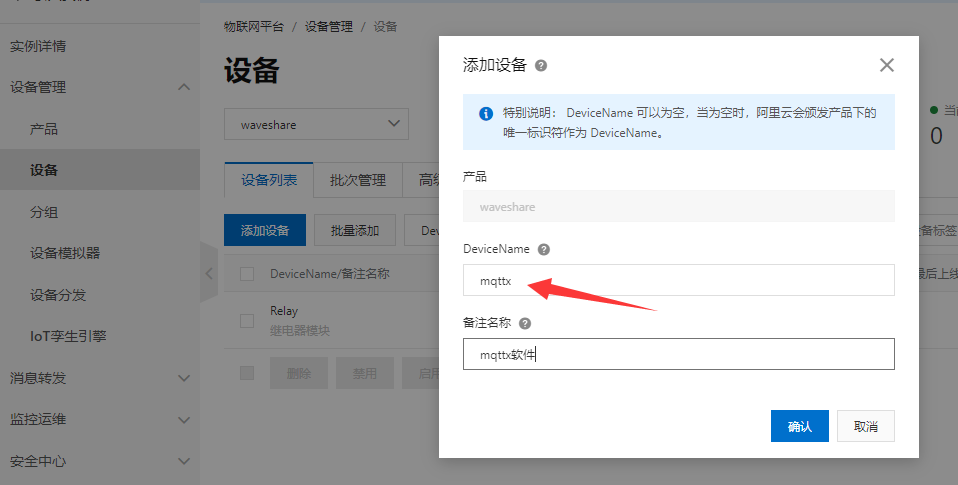
- For testing, you can add a device named mqttx device, the Ali cloud web page can only send text data and can not send binary data, so use mqttx software to facilitate debugging.
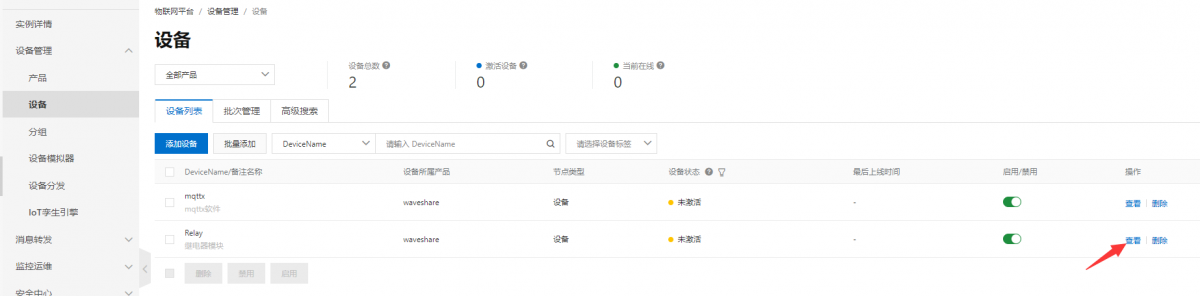
- After adding the devices, you can view two devices named "mqttx" and "relay" in the device list. Click on "View" to enter the page for the "Relay" device.
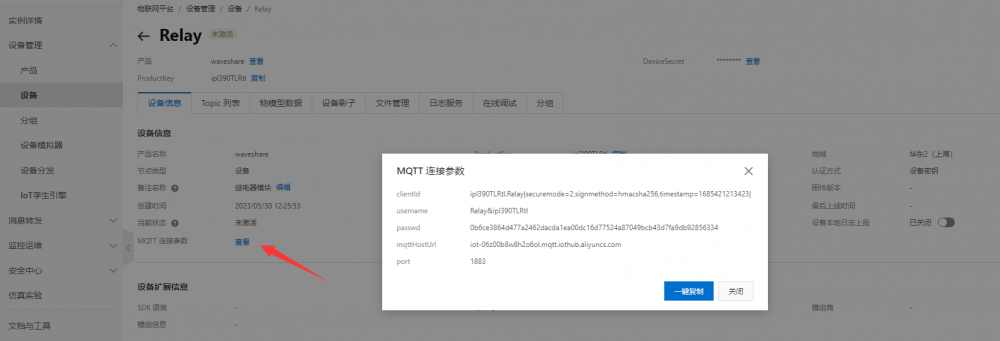
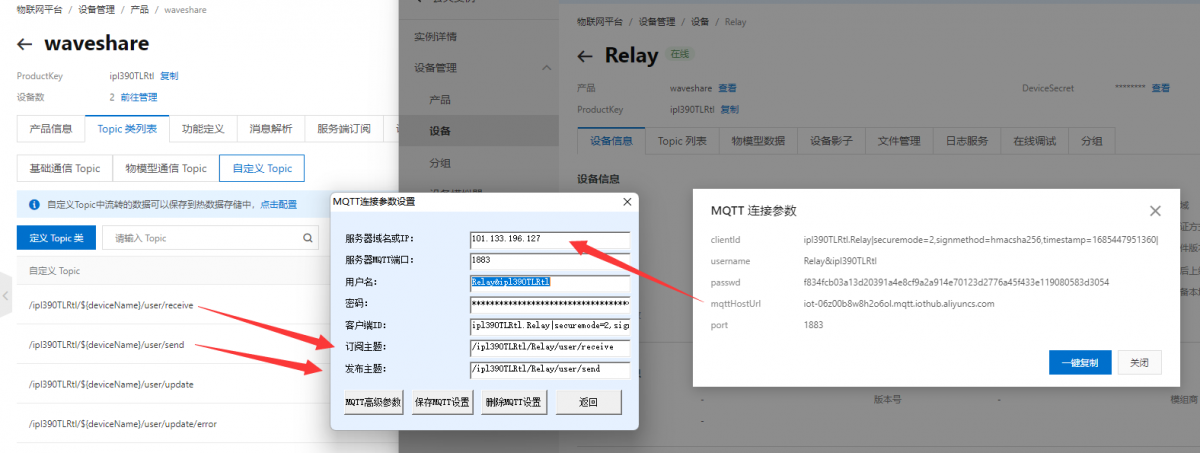
- Select "Device Information" -> "MQTT Connection Parameters" to view the MQTT connection parameters.
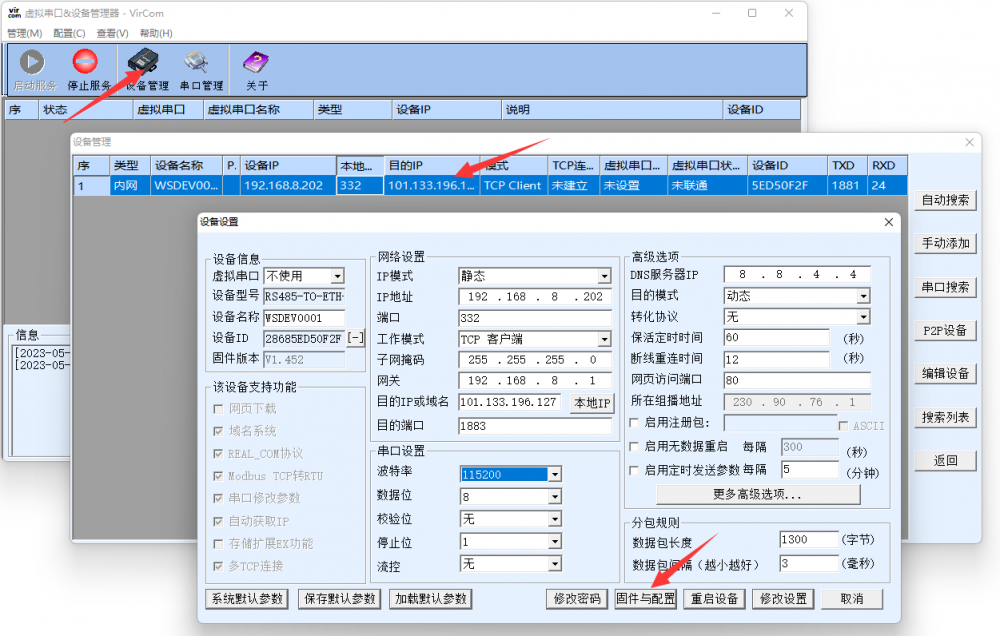
- Open Vircom -> Device Management -> left mouse click on the corresponding device -> Firmware and Configuration -> MQTT Configuration and enter the configuration page.
- Configure the connection parameters based on the Relay device MQTT connection information. When the configuration is complete, select Save MQTT Settings and click Download again.
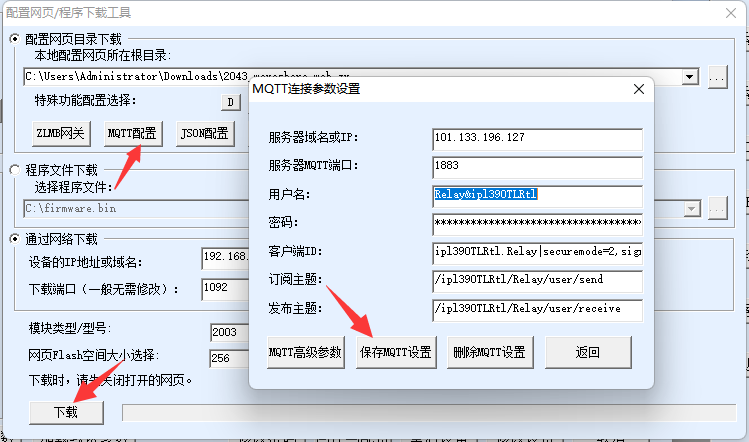
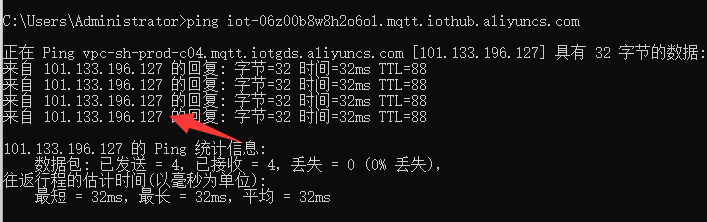
- Note: You can get the AliCloud IP address by pinging mqttHostUrl.
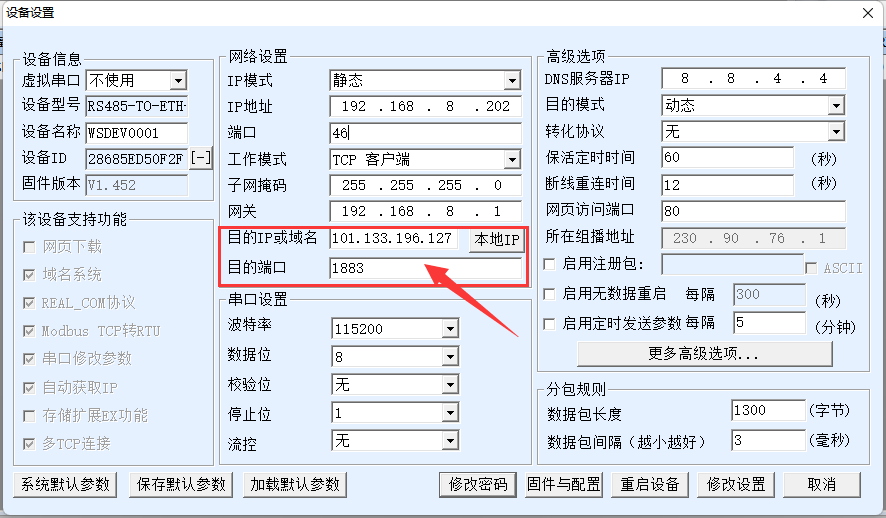
- Set the target IP and target port, and click Modify Settings to save. Note: If the local port is 0 then you need to modify a non-zero port, otherwise you cannot connect.
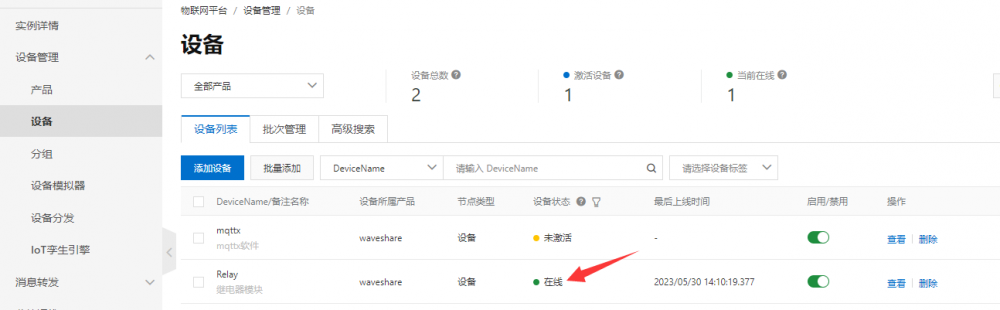
- After a successful connection, you can see that the Relay device has gone from inactive to online.
- Download the MQTTX software and install it, creat a new connection after successful installation.
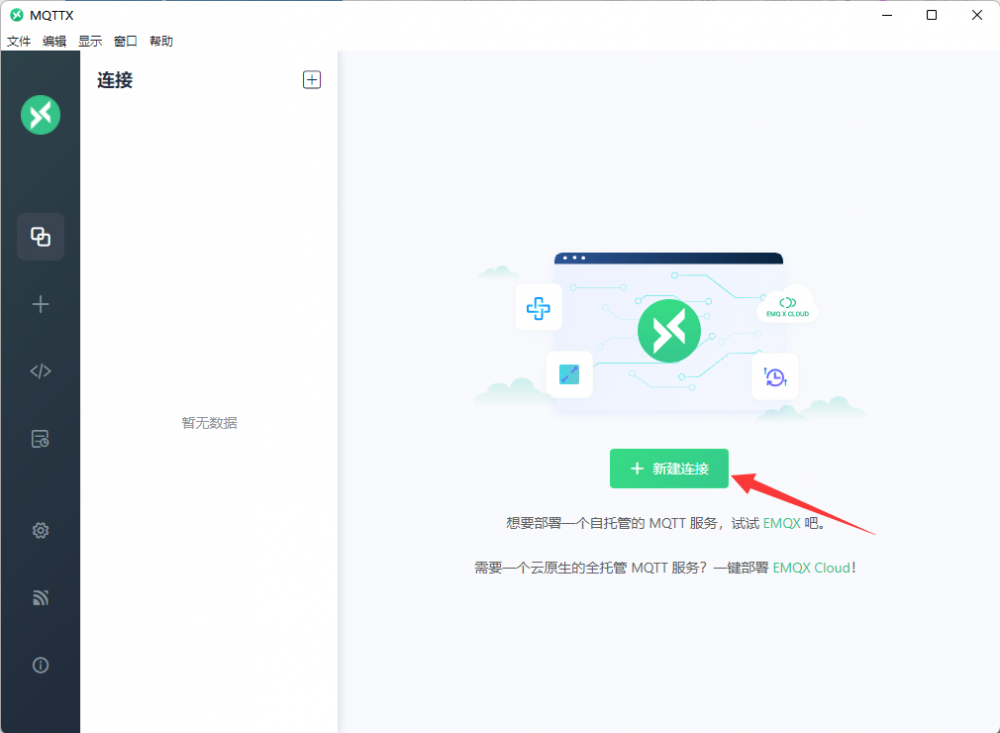
- Create a new connection based on the mqttx device MQTT connection parameters.

- Add a subscription after a successful connection.
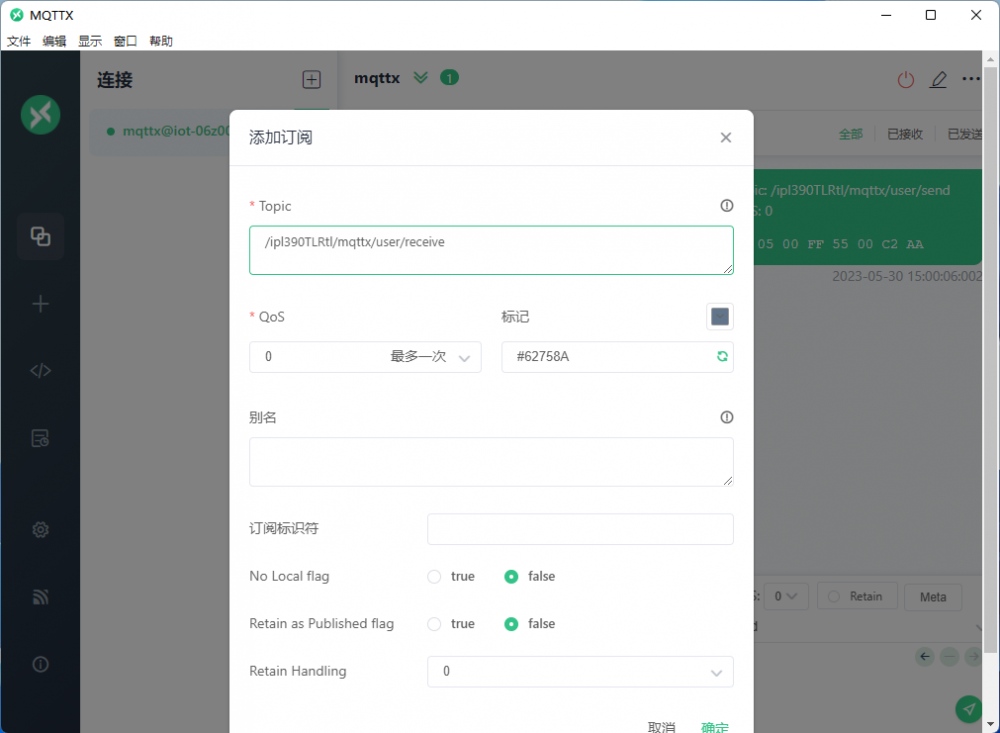
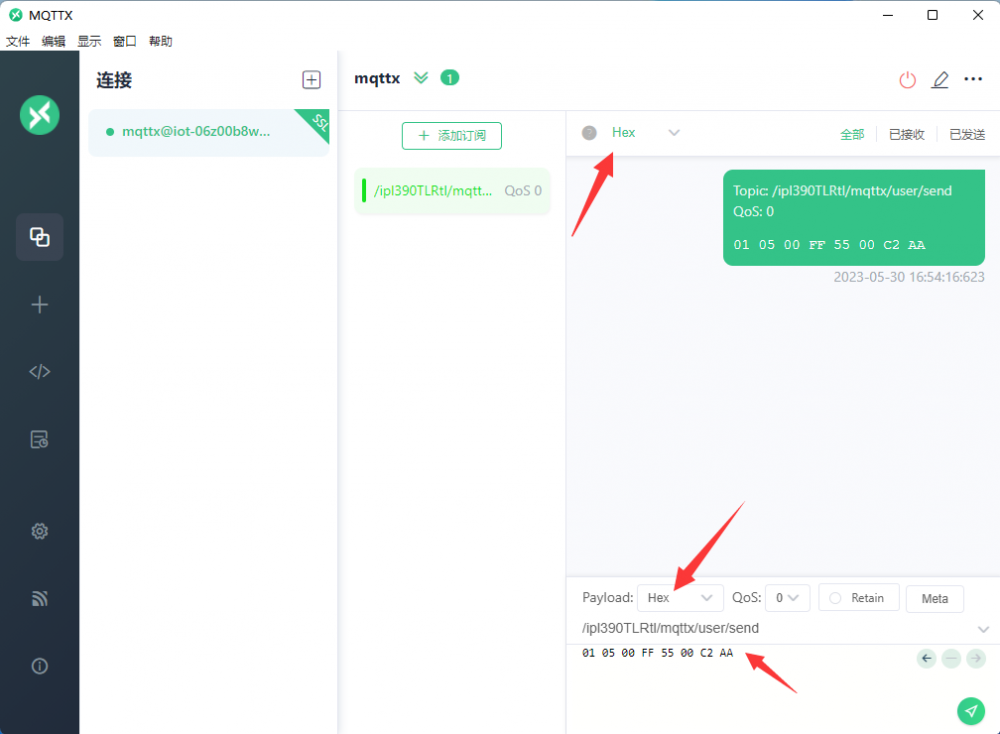
- Enter the sent topic, select hex to send and hex display, and send the data.
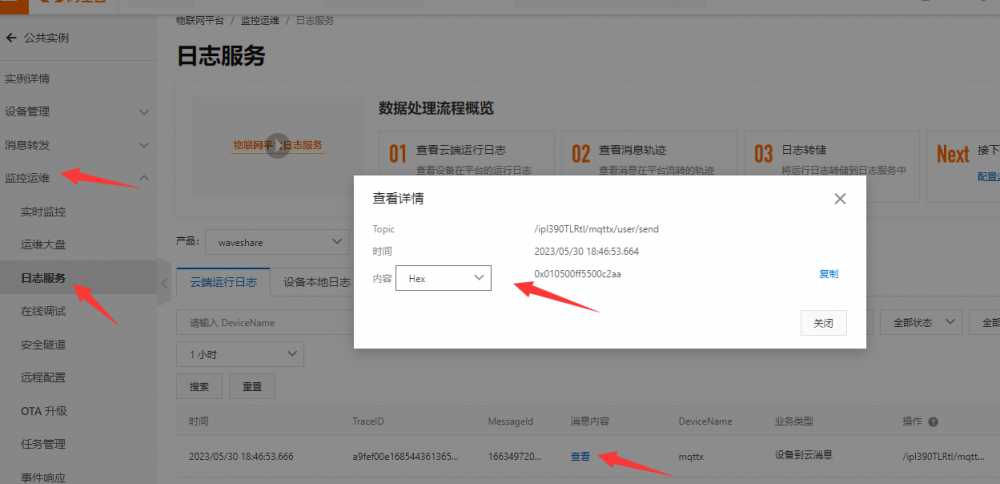
- Select Monitor Ops -> Log Services -> Cloud Operation Log to check the information received from the cloud and select hex to display.
- At this point, both the Relay device and the mqttx device have been connected to the cloud platform, but it is not yet possible to control the relays through the mqttx software, and finally, message forwarding needs to be added.
- Select Message Forwarding -> Cloud Product Flow -> Data Source -> Create Data Source, the data source name is mqttx-send.
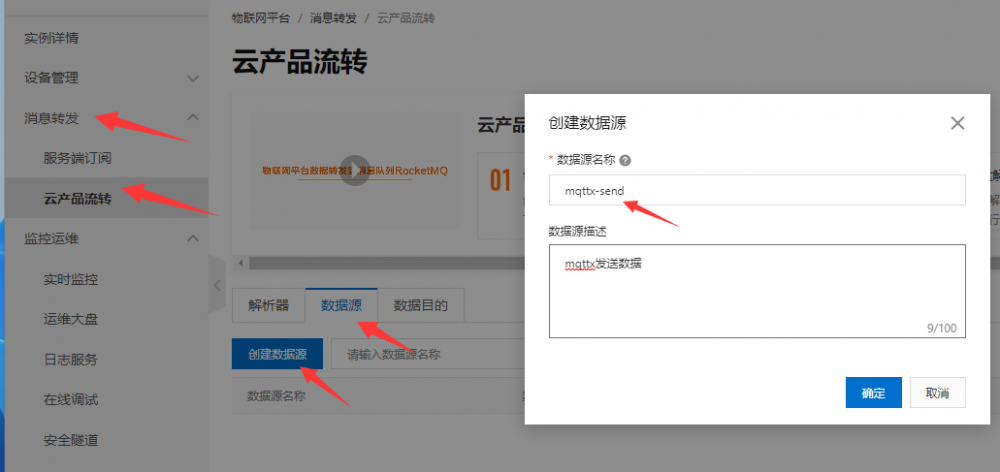
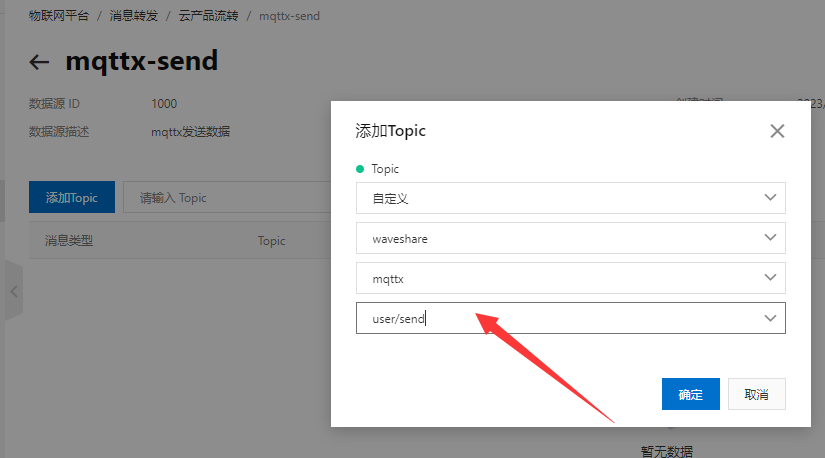
- Go to edit page, add Topic, select custom, waveshare product, mqttx device, user/send topic.
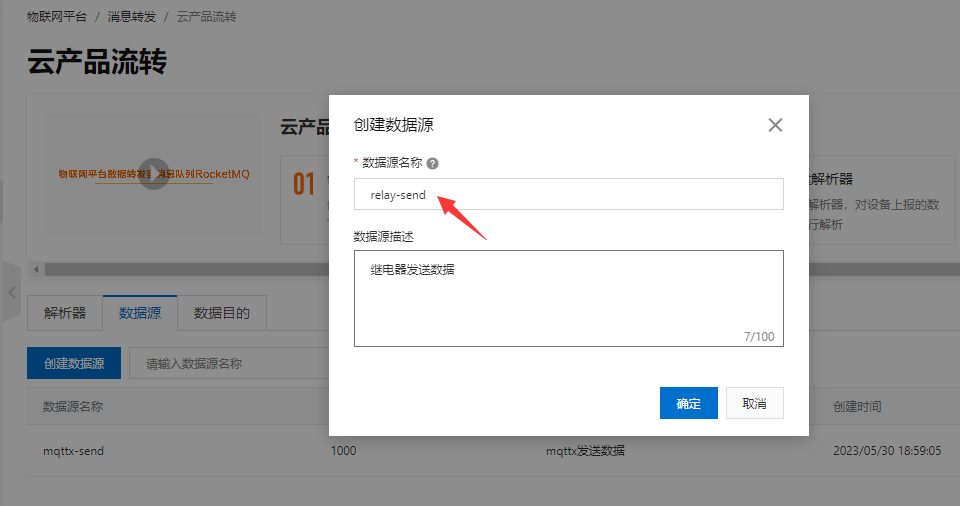
- Select Message Forwarding -> Cloud Product Flow -> Data Source -> Create Data Source and then add a data source with the name of relay-send.
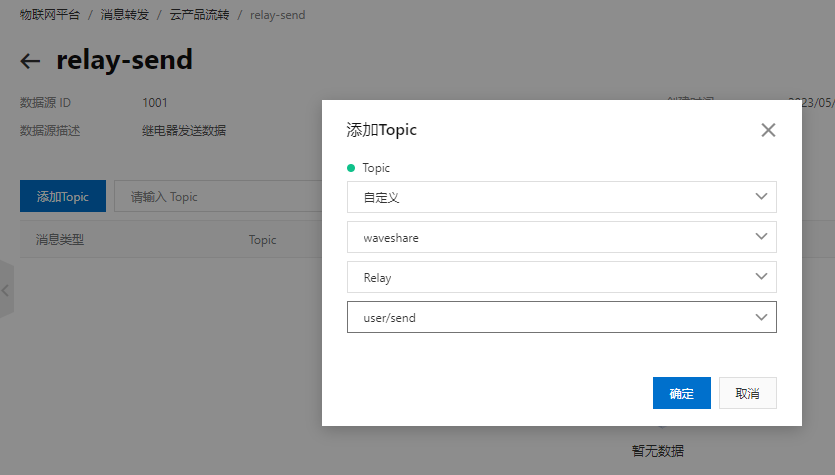
- Go to edit page, add Topic, select custom, waveshare product, relay device, user/send topic.
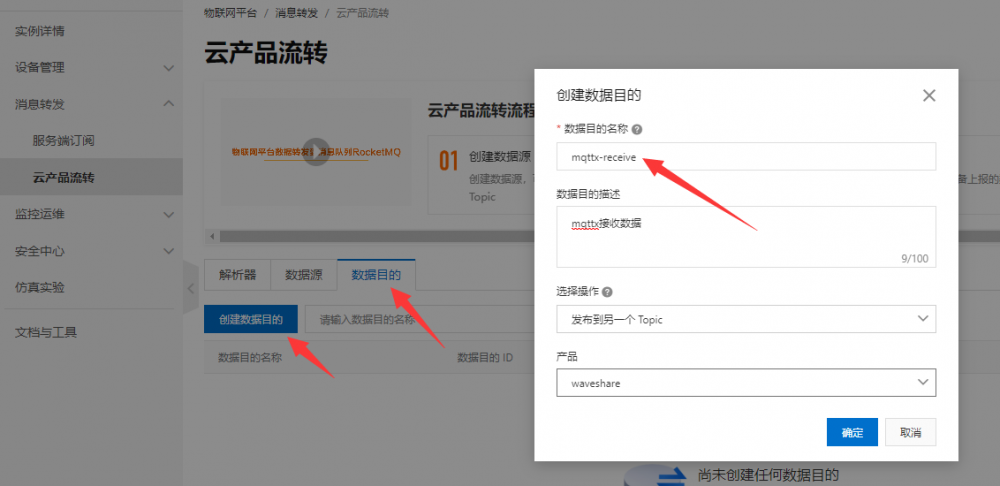
- Select Message Forwarding -> Cloud Product Flow -> Data Destination -> Create Data Destination, the data destination name is mqttx-receive.
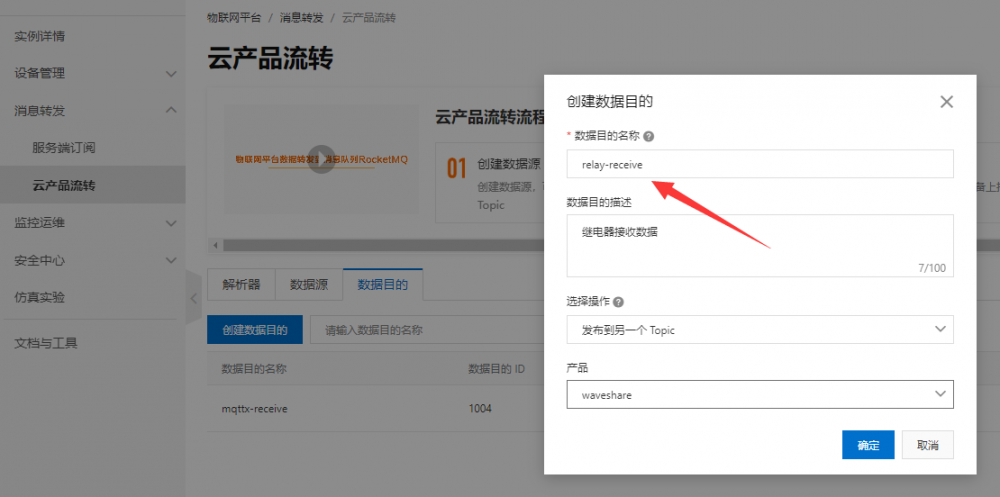
- Select Message Forwarding -> Cloud Product Flow -> Data Source -> Create a data source and then add a data destination with the name of relay-receive.
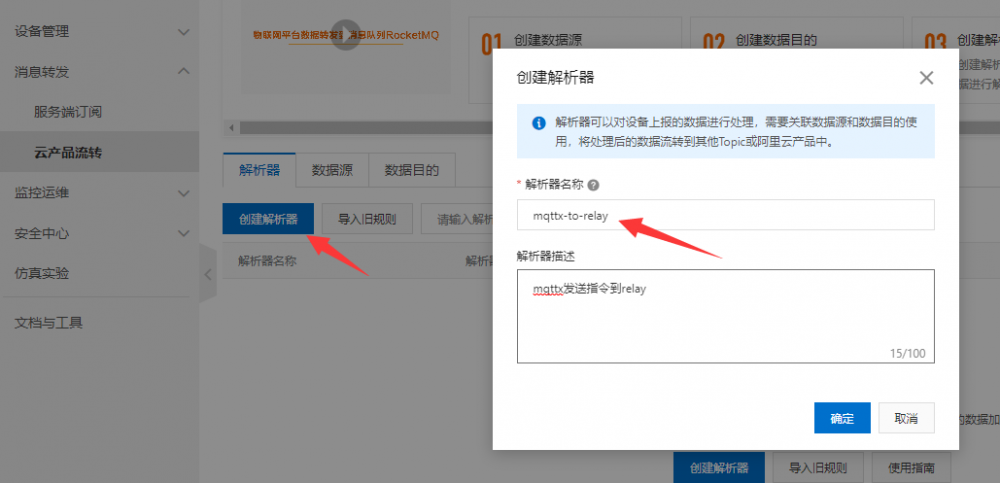
- Select Message Forwarding -> Cloud Product Flow -> Parser -> Create a parser with the name mqttx-to-relay.
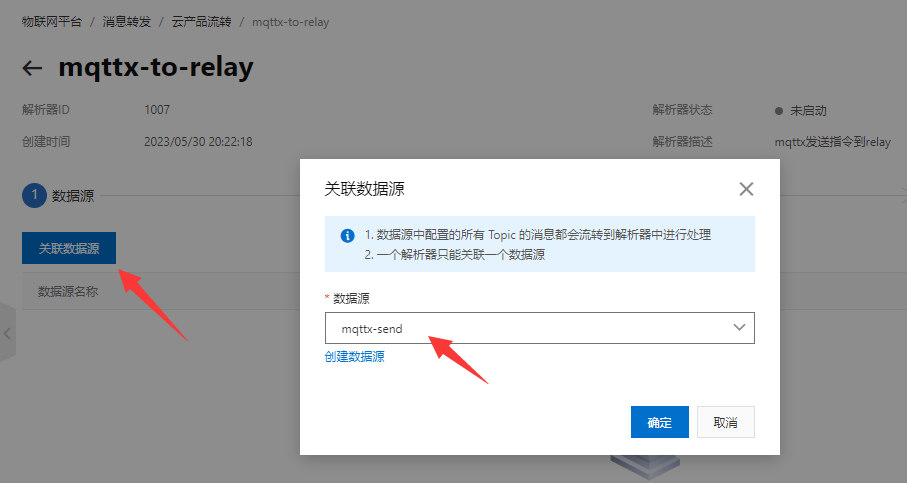
- Open mqttx-to-relay edit page -> Data Source -> Associated Data Source,Data Source select mqttx-send
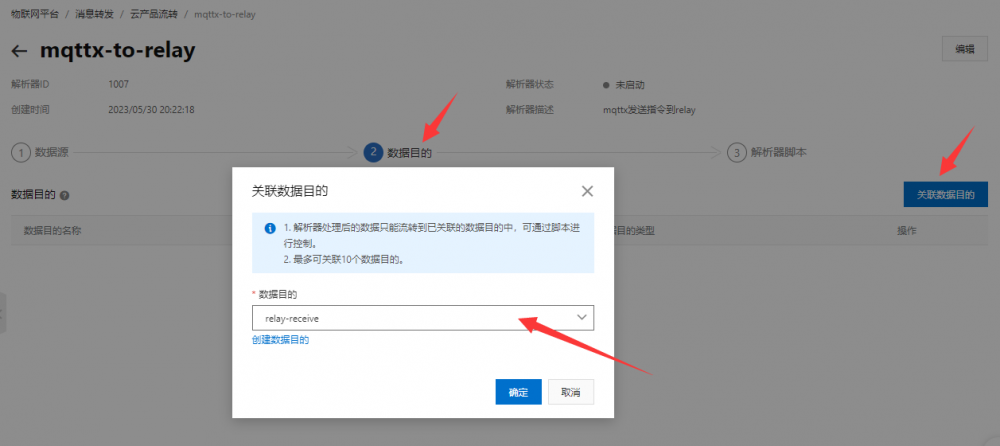
- Data destination -> associate data destination->data destination selection relay-receive
- Parser script, add the following code and publish, where 1005 is the relay-receive data destination ID, /ipl390TLRtl/Relay/user/receive is the relay receive topic, needs to be more practical to modify.
//Through the payload function, get the message content reported by the device and convert the payload data into binary variables for pass-through
var data = payload("binary");
//Forwarding data to relays
writeIotTopic(1005, "/ipl390TLRtl/Relay/user/receive", data);
- Select Message Forwarding -> Cloud Product Flow -> Parser -> Create Parser then create a parser with the name relay-to-mqttx.

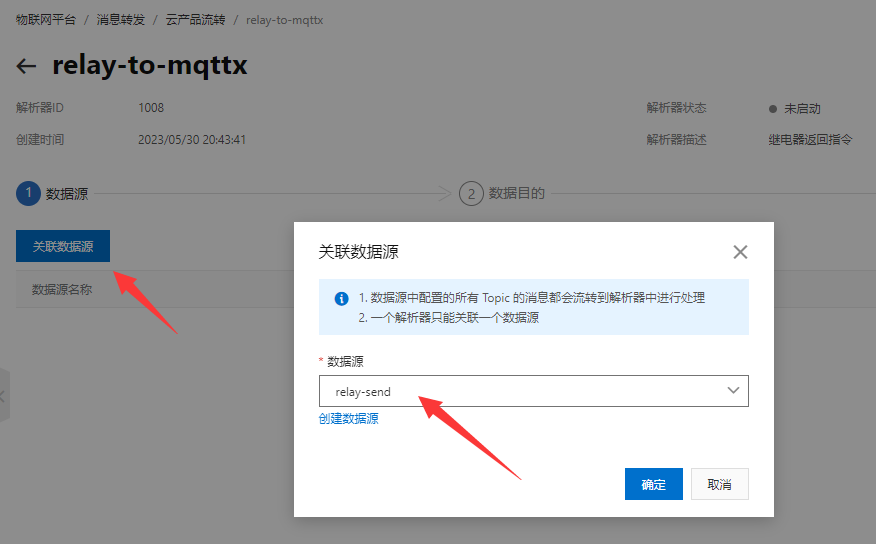
- Open mqttx-to-relay edit page -> data source -> associate data source, data source select relay-send.
- Data Destination -> Associate Data Destination -> Data Destination Select mqttx-receive.
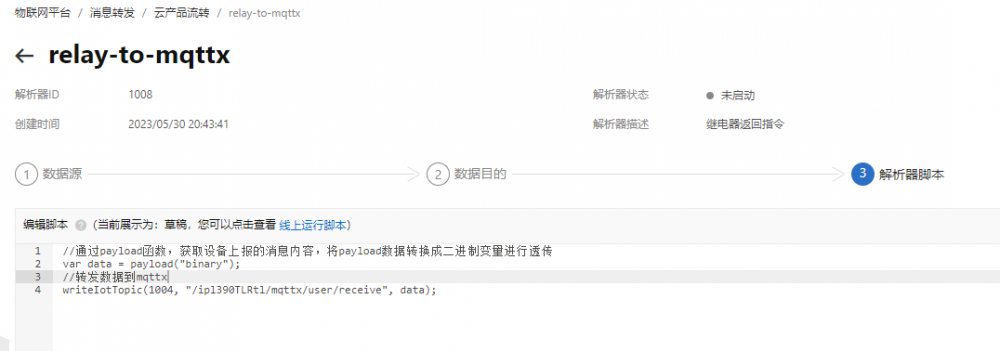
- Parser script, add the following code and publish, where 1004 is the mqttx-receive data destination ID, /ipl390TLRtl/mqttx/user/receive is the mqttx receive topic, need to be more practical to modify.
//Through the payload function, get the message content reported by the device and convert the payload data into binary variables for pass-through
var data = payload("binary");
//Forwarding data to relays
writeIotTopic(1004, "/ipl390TLRtl/mqttx/user/receive", data);
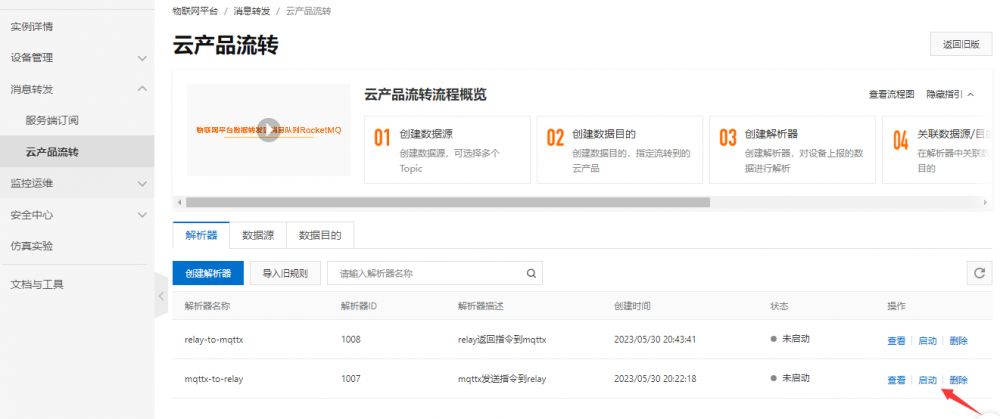
- Finally, select Start Parser to implement data forwarding. Message forwarding is configured and enabled.
- At this point, you can send commands to control the relays via MQTTX. Send the relay flip command as shown below. Under normal circumstances, the relay will be flipped and the command data will be returned.
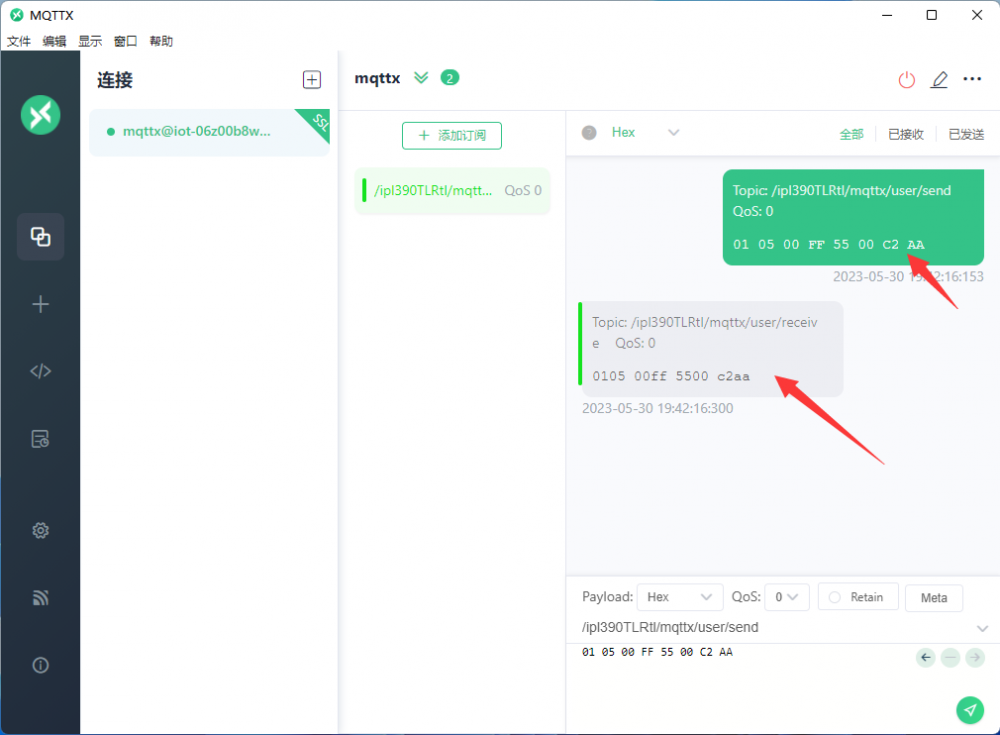
- The operation is now complete. You can try to send more Modbus commands to test. The data flow is shown below.
- MQTTX sends the command -> AliCloud receives the data and forwards it to relay -> relay receives the data to execute the action and return the data to AliCloud -> Ali cloud receives data and forwards to mqttx -> MQTTX receives the return data.
TAG:
ADXL354CEZ
Raspberry Pi Pico 2 RP2350 Pico2 ARM Cortex-M33 And RISC-V Hazard3 520KByte 4MByte QSPI Flash
ESP32 S3 Development Board 3.5 inch LCD Capacitive Touch Screen 3.5inch Display 320×480 N16R8
USB Camera 2MP GC2093 ‌WDR Backlight Compensation‌ Onboard microphone
Raspberry Pi 5
Milk-V Duo S WIFI Configuration
ESP32-P4-WIFI6 3.5inch LCD Display AI Development Board 320×480 3.5 inch TouchScreen Deepseek
ESP32 ST7789 tutorial
Raspberry Pi 5 PCIe to M.2 Multi Function Adapter Board Supports Dual 4K HDMI Output
ESP32-S3FH4R2 Matrix 8x8 RGB-LED-WiFi Bluetooth QST Attitude Gyro Sensor QMI8658C Arduino Python
1.69inch LCD TouchScreen Display 240×280 ST7789 Arduino Raspberry Pi ESP32S3 Pico STM32
ESP32-S3 AI Camera Development Board Dual Microphone with Display Port
RS485 to RJ45
Sensor Development Board
ESP32-S3 Development Board 4 inch LCD TouchScreen Display 480x480 RS485 /SHT20 /Relay For Arduino LVGL 86 TVbox
ESP32 S3 AI 1.54inch Development Board 1.54 inch TouchScreen Display DeepSeek
Industrial Modbus RTU 8 ch Relay Module
White
Raspberry Pi Zero Pi0 2W Digital Photo Frame 7.3 inch E6 Full Color E Paper Ink Calendar Art Poster
Core3566002032

TAG:
SpotPear
Raspberry Pi Camera IMX415 8MP Full-color 95.5° Wide Angle Auto Focus Distortion-free
X1009 Raspberry Pi 5 PCIe To 5-Port SATA3.0
ESP32-S3
Raspberry Pi 5 PCIe M.2 5G 4G 3G RM520N-GL
Milk-V Duo 256
Raspberry Pi 3D Display
ESP32-P4-WIFI6 5inch LCD Display AI Development Board 720×1280 5 inch TouchScreen Deepseek
EchoEar ESP32 S3 AI Development Board with 1.85-inch LCD Display Cute Cat Pet Chatting Robot N32R16
VisionFive2 Fan
SP485EN
CPU
Jetson Orin Nano 8GB AI 40Tops Embedded Edge Systems NVIDIA
WiFi Wireless ESP32 DDSM400 Motor Driver Direct Drive Servo Hub Motors Raspberry Pi
Onboard ESP32-C6 Development Board
ESP32 1.9 inch LCD Capacitive TouchScreen 1.9inch Display ST7789 170x320 for Arduino /Raspberry Pi /Pico
Wireless RTL8822CE NIC 2.4G 5GHz Dual Band WiFi High Speed Wireless Card RTL8822CE-CG core
Core3566104032
M12 High Resolution Lens 12MP 113 2.7mm Raspberry Pi High Quality Camera M12
ESP32-C6 LCD Development Board 0.85 inch Display 0.85inch Screen 128x128 Mini SD-Port QST LVGL For Arduino