


- sales/support
Google Chat:---
- sales
+86-0755-88291180
- sales01
sales@spotpear.com
- sales02
dragon_manager@163.com
- support
tech-support@spotpear.com
- CEO-Complaints
zhoujie@spotpear.com
- Only Tech-Support
WhatsApp:13246739196
- Purchase/Shipping/Refund
WhatsApp:13424403025
- HOME
- >
- ARTICLES
- >
- Common Moudle
- >
- Camera
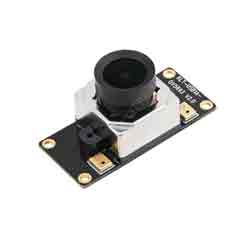
OV5693 5MP USB Camera (A) User Guide
Resource
Documents
Software
Specification
- Pixel: 5MP
- Sensor: OV5693
- DSP: Automatic white balance(AWB)\Automatic exposure(AEC)\Automatic gain control(AGC)
- Camera:
- CCD Size: 1/4inch
- Aperture (F): 2.1
- Focus length (EFL): 2.5mm
- Field of View (FOV): 135°
- Focus Type: Auto focus
- Interface: USB2.0
- Image:
- Format: MJPG, YUY2
- Static image resolution: 2592 × 1944
- Video recording (MJPG):
- 15 FPS 2592 × 1944
- 15 FPS 1920 × 1080
- 15 FPS 1280 × 720
- Video recording (YUY2):
- 3 FPS 2592 × 1944
- 5 FPS 1920 × 1080
- 10 FPS 1280 × 720
- 15 FPS 640 × 480
- Operating Voltage: 5V ± 5%
- Operating Temperature: 0°C ~ 50°C
- Len Size: 18.00 × 18.00 × 19.39 mm
- Dimensions: 18.00 × 36.00 mm
- OS Support: Windows, Linux, MacOS
Working with Windows PC
Test Software
Most of the Windows 10 PC has pre-install Camera software, you can use it to test the USB camera.
If your PC doesn't have Camera software, you can also download the AMCap test software from Resouce->Software and test.
Testing
- Use Camera Software of Windows
- Search "Camera" and open the software.
- Click the setting icon on the top left to configure the image/video.

- You can click the icons on the right to switch between Image Capture or Video Recording.
- AMCap Software
- Download and install the AMCap software.
- You can click the Options option, choose Video Capture Pin... or Still Capture Pin... to configure image/video.

Working with Raspberry Pi
Buster
- Open a terminal of Raspberry Pi (You can use the Ctrl+Alt+T shortcut):
- Edit the modules file:
sudo nano /etc/modules
- Add the following command in the document and save:
bcm2835-v4l2
- Ues command sudo raspi-config to open the configuration:
- Choose Interface Option -> Camera -> Yes to enable the camera and reboot.
Bullseye
You can directly test the USB camera on the Bullseye system.
Camera Test
- Open a Terminal of Pi and install luvcview tool with the following command:
- sudo apt-get install luvcview -y
- After installing, use the following command to test the USB camera.
- sudo luvcview -s 1920 x 1080


Working with Jetson Nano Developer Kit
- Open a terminal of Jetson Nano Developer Kit (You can use the Ctrl+Alt+T shortcut or open it by Mouse)
- Use the following command for previewing:
- nvgstcapture-1.0 --camsrc=0
- With the command, a preview window is opened

【Notice】You may need to use the camera by script/codes, in this case, you can refer to tools/libraries like Opencv yourself.
FAQ
Question:Why does the camera display abnormally when my hand touches it back?
Answer:
Do not touch the components on the back of the PCB with your hands, so as not to affect the electrical characteristics.
Question:Does the module get hot during use?
Answer:
It is normal that the module would generate a lot of heat during use.
Question:Why can't I control brightness, contrast, or other parameters?
Answer:
If you are using a Mac system and Opencv, some parameter settings are not available, so we recommend using a Linux system and the V4L2 driver.
TAG:
CSI-to-HDMI
SpotPear
800x480
Raspberry Pi Transparent LCD
ESP32-S3
Raspberry Pi Camera Module 3 Sensor Assembly IMX708 Official Original 11.9MP Camera
X1201 Raspberry Pi 5 UPS Board Uninterruptible Power Supply For 18650-Li-Battery (NOT includ)
Raspberry pi Pico development board RP2040 Core A Based On Official RP2040 Dual Core Processor
Pi5 Pure-Copper Active Cooler
SpotPear
Raspberry Pi 5inch Display 1024x600 HDMI Capacitive TouchScreen 5 inch LCD B Wide-Cover For Mini PC
Raspberry Pi DSI
USB Binocular Camera 2MP AR0144 Distortion Free Binocular Synchronous Frame USB 2.0 Plug and Play
Raspberry Pi
Raspberry Pi Pico 2 RP2350-Matrix Development Board 8×8 RGB LED Matrix QMI8658 6-Axis Sensor
Raspberry Pi 5 Camera User Guide
ESP32-C6 AI Voice Chat Robot For Xiaozhi 1.8 inch AMOLED Development Board 1.8inch TouchScreen Deepseek
Spotpear
Raspberry Pi Autofocus Camera
Raspberry Pi 5 5V5A Power
TAG:
STM32 1.5inch LCD
Raspberry Pi 8inch LCD HDMI Display TouchScreen 768x1024 Computer PC
Arduino IR Thermal Imaging Camera
ESP32 S3 display
Raspberry Pi Camera IMX415 8MP Full-color 95.5° Wide Angle Auto Focus Distortion-free
Raspberry Pi Industrial HMI 8 inch LCD TouchScreen Display 1280x800
Raspberry Pi 5 Official Original AI Kit Hailo8l 13Tops 26Tops PCIe M.2 HAT Pi5
Raspberry Pi 5 5-layer Case
Industrial
ESP8266/ESP32 Infrared Transmitter/Receiver NEC Command WIFI Transmission Module
RS232 to RS422
ESP32-S3 1.14inch LCD
Knob screen
MPS2242 POE Raspberry Pi 5 PCIe M.2 NVMe SSD Pi5 2242 2230
Raspberry Pi Screen
VisionFive2 Cooling
CM4 ADAPTER Interface protection board For Raspberry Pi Compute Module 4 Lite/eMMC
Raspberry Pi 3G 4G LTE Mini PCIe Samsung ARTIK Rock64 Asus Tinker Latte Panda
Raspberry Pi 5 case
USB camera 2MP SC2210 Starlight Level Camera USB 2.0 plug and play