




- sales/support
Google Chat:---
- sales
+86-0755-88291180
- sales01
sales@spotpear.com
- sales02
dragon_manager@163.com
- support
tech-support@spotpear.com
- CEO-Complaints
zhoujie@spotpear.com
- Only Tech-Support
WhatsApp:13246739196
- Purchase/Shipping/Refund
WhatsApp:13424403025
- HOME
- >
- ARTICLES
- >
- Raspberry Pi
Windows Environment User Guide
Windows Environment Setting Tutorial
- This tutorial is applicable to the Raspberry Pi Pico and the RP2040 series development board developed by our company.
- The default development environment is Windows for example (the Raspberry Pi can be installed with the official installation script).
C/C++ SDK
You need to install the corresponding toolchain are:
- Arm GNU Toolchain (You need to install the corresponding version, such as Windows needs to install the file with the suffix -arm-none-eabi.exe.)
- CMake
- Visual Studio 2022
- Python 3.10
- Git
- Also, we have packaged the installation package and uploaded it to our server.
- You can click here to download the installation package.
How to Install
Arm GNU Toolchain
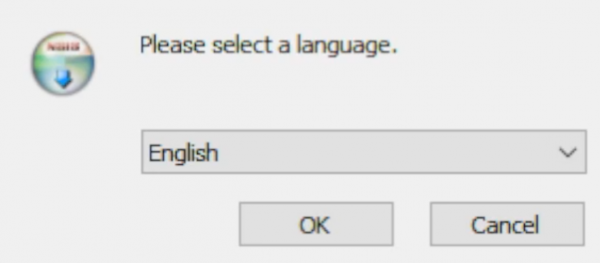
- Select language.
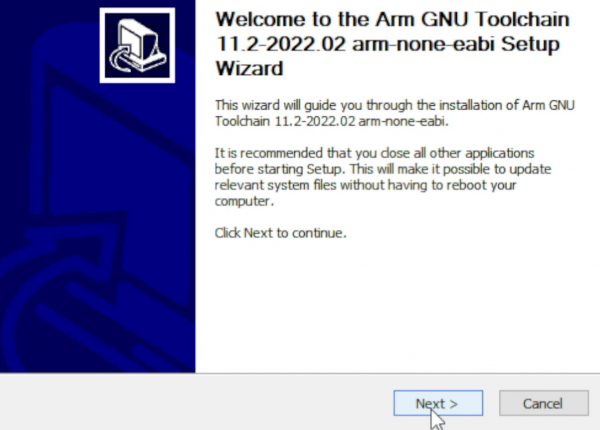
- Enter the installation wizard.
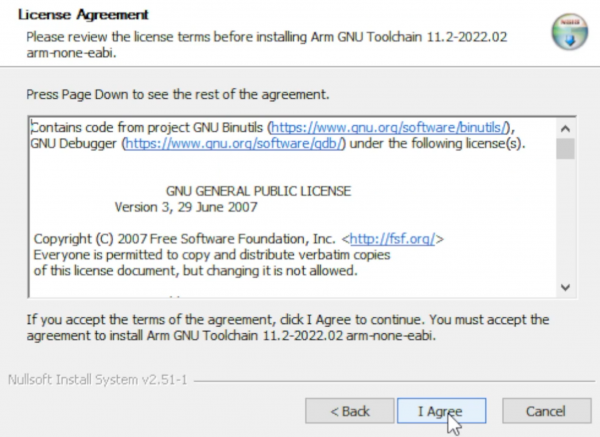
- Agree to the user agreement and continue.
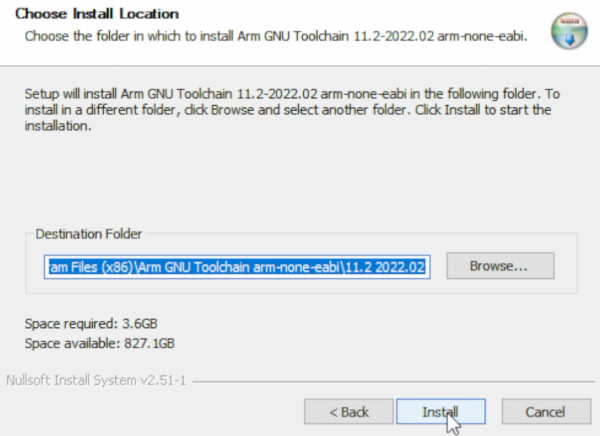
- Select the installation address.
- Wait for the installation to complete.
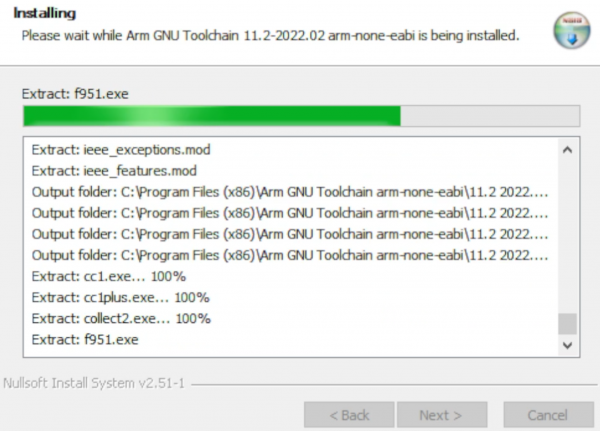
- Note: Check the option in the red box in the picture.
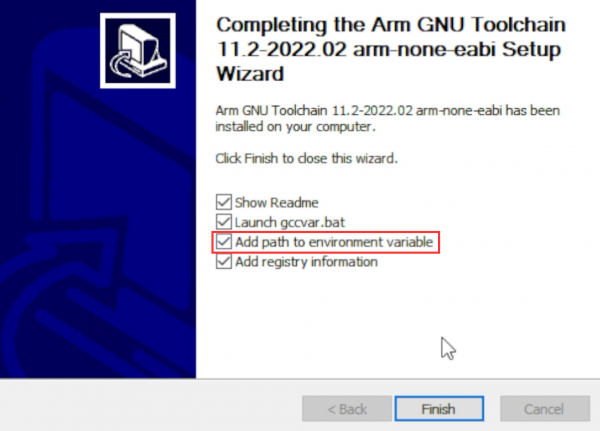
CMake
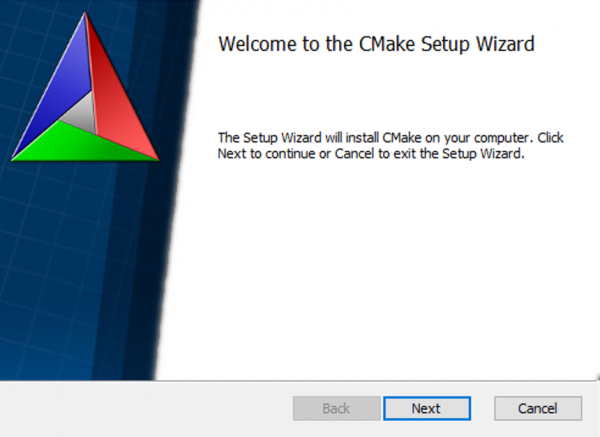
- Enter the installation wizard.
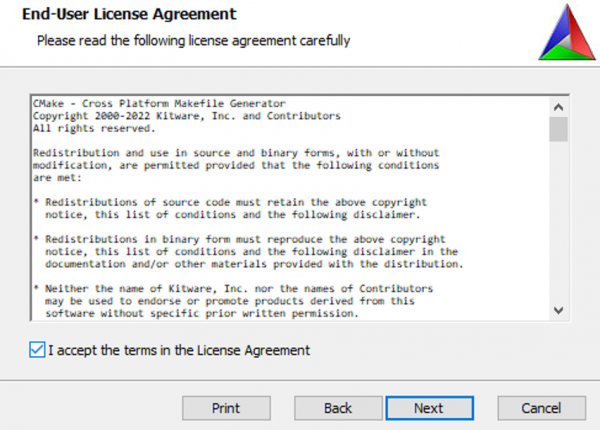
- Agree to the user agreement and continue.
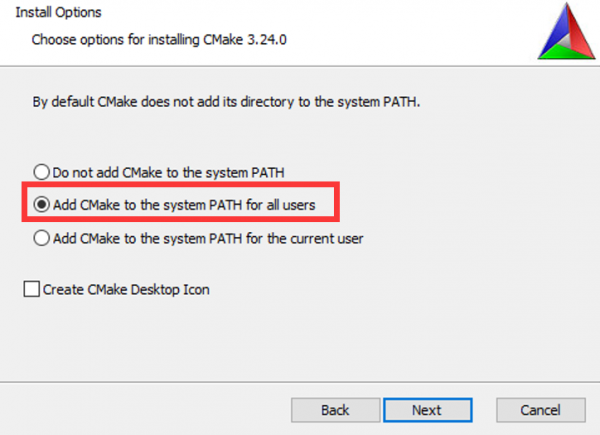
- Add CMake to the system PATH for all users.
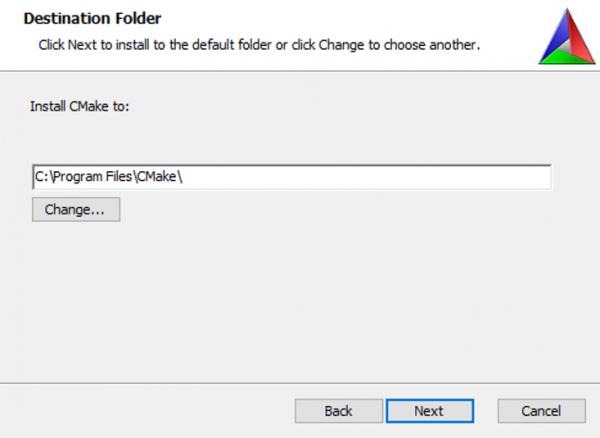
- Select the installation location.
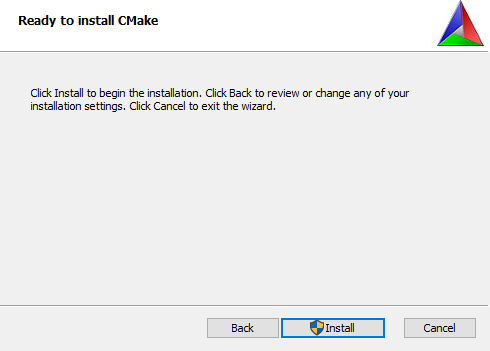
- Enter to install.
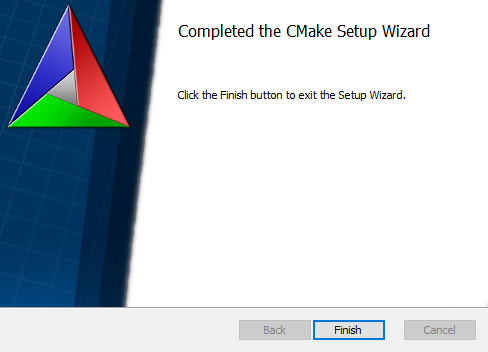
- Finish.
Python
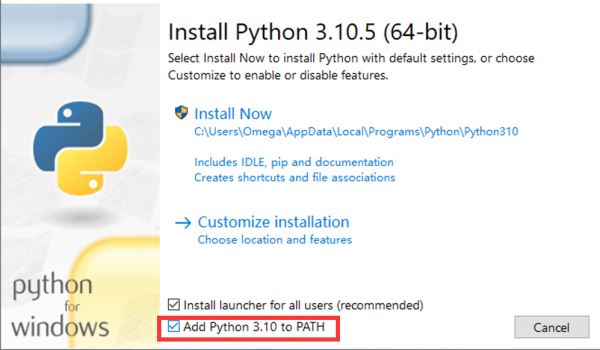
- Enter to install and check tp add PATH.
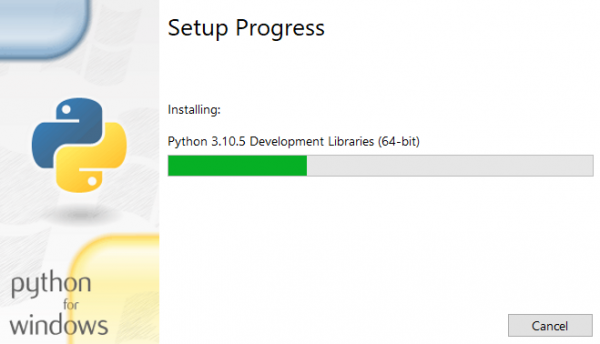
- Wait for installation.
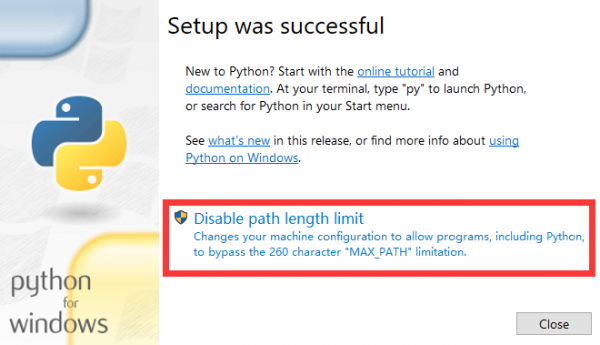
- Friends who have the options in the red box can click to disable the PATH length limit.
Git
- There are many installation options for Git and the length is relatively long. Here we only point out the recommended modification parts, and the default settings for the rest of the options are recommended.
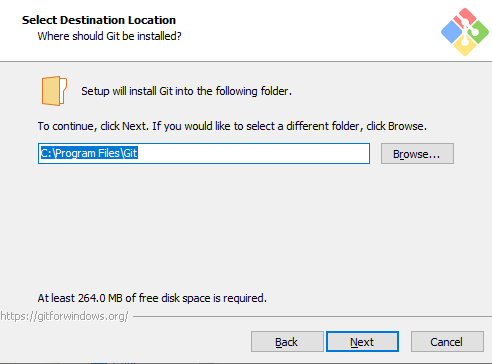
- Choose an installation location.
- Choose Git default editor (here I choose VS Code).
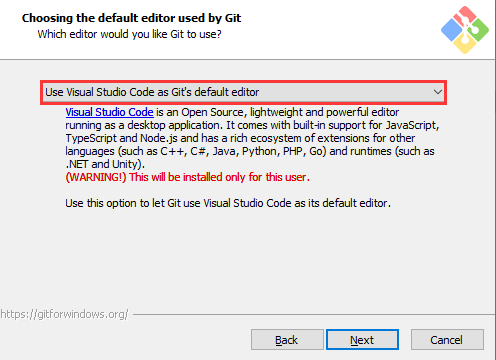
- Next, keep the default settings, select Next, and finally the installation is successful.
Visual Studio 2022
Visual Studio 2022 installation is very linear, just note the following one point.
When selecting a build tool, select the C++ tool in the figure: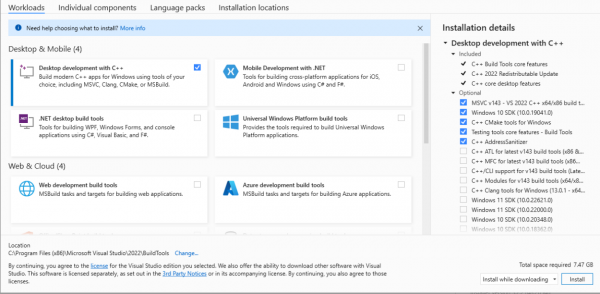
Get and Compile the Demo
Get SDK Demo
In the folder where you want to download the SDK, Shift + right click -> select "Open powershell here" and enter the command:
git clone -b master https://github.com/raspberrypi/pico-sdk.git
cd pico-sdk
git submodule update --init
cd ..
git clone -b master https://github.com/raspberrypi/pico-examples.git
Set the Environment and Compile
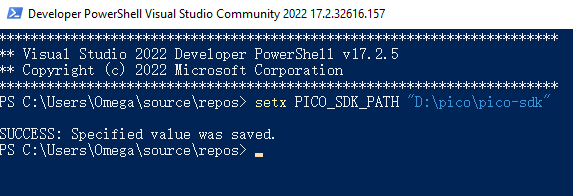
- Open your VS 2022 -> Tools -> Command Line -> Developer PowerShell.
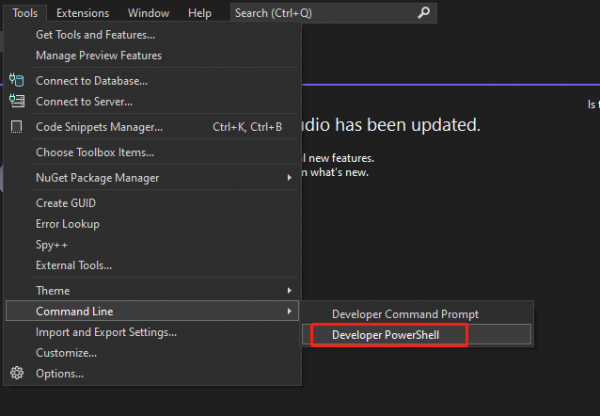
- Set the absolute address of your pico-sdk to PICO_SDK_PATH, for example, my pico-sdk address is "D:\pico\pico-sdk".
- Jump to the folder where pico-examples is located, create a build folder and compile.
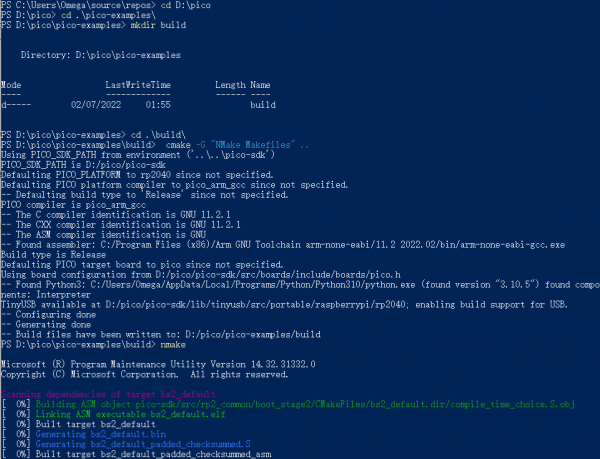
- Just wait for the compilation to complete (note that all demos are compiled here, so the compilation time is a bit long).

- The following are all instructions:
setx PICO_SDK_PATH "..\..\pico-sdk"
cd pico-examples
mkdir build
cd build
cmake -G "NMake Makefiles" ..
nmake
Download the Firmware
Select the demo firmware you need to download, and drag it into the memory simulated by pico:
TAG:
ESP32 C5 Development Board 2.73 inch LCD Display Screen ILI9488 For Dual band WiFi Onborad SD-Port
spotpear
Raspberry Pi 5 Pure-Copper Active Cooler
SpotPear
TVOC Sensor gas Sensor Expansion board UART High Sensitivity For Arduino /Raspberry Pi /Pico /ESP32
Raspberry Pi Pico ST7789
SC servo driver
OLED-LCD-HAT-A
spotpear
2.13Inch E-Paper
Raspberry Pi
1.3inch LCD RP2040-PiZero Game ST7789 Raspberry Pi Pico LCD Display Screen
Raspberry Pi Screen
OPS Computer
Core1121 LoRa LR1121 HF LF SPI For Sub-GHz and 2.4GHz
Luckfox Pico plus
Raspberry Pi 5 PD Trigger
Industrial 4-ch PWM RS485 pulse output module Modbus RTU rail
xiaozhi AI Character Personality Configuration Tutorial
Argon
TAG:
NVIDIA Jetson AGX Orin 32 64GB AI 275TOPS
RS232 to RJ45
DeepSeekAl Voice Chat EPS32 S3
Raspberry Pi 5 Silver-Shadow Case
3.5 inch LCD
Raspberry Pi Pico W
ESP32-S3 AI Camera 3.5inch LCD Dual MIC Development Board MINI TV BOX Display 3.5 inch Voice Interruption Object Recognition 10-in-1 Multifunctional
Raspberry Pi Triple Screen HAT
PC USB Secondary Screen
Raspberry Pi DA7212 I2S Audio For XiaoZhi AI Expansion Board Dul-mic Free-Driver For PI5/PI4/Zero
Raspberry Pi 5 inch LCD 720x1280 Capacitive TouchScreen Display
SpotPear
UNO-Q 10.1 inch DSI Display MIPI LCD Capacitive TouchScreen 800x1280
Raspberry Pi 5 Active Cooler
ESP32-S3 AI 3.97-inch e-Paper Ink Screen 3.97inch Display AIoT Development Board Deepseek
Raspberry Pi 4 Camera
Industrial-grade isolated 2-way RS485 hub repeater One RS485 TO Two RS485
Clock trinket
ADXL354C Sensor
5.79inch e Paper Black-White display 792x272 Arduino Raspberry Pi Jetson Nano STM32