



- sales/support
Google Chat:---
- sales
+86-0755-88291180
- sales01
sales@spotpear.com
- sales02
dragon_manager@163.com
- support
tech-support@spotpear.com
- CEO-Complaints
zhoujie@spotpear.com
- Only Tech-Support
WhatsApp:13246739196
- Purchase/Shipping/Refund
WhatsApp:13424403025
USB A-C-PD User Guide
一、Introduction
To run the Raspberry Pi 5 at full speed and remove the 600mA current limit on the USB ports, a power supply with a 5V5A PD protocol is required. However, official Raspberry Pi power supplies are expensive, and in most applications, the Raspberry Pi 5's power consumption is unlikely to exceed 3A.
For example, a Raspberry Pi 5 quad-core CPU consumes approximately 1.2A under full load. With an external PCIe SSD, the typical power consumption is about 0.5A. An external 5G module connected to the USB 3.0 port consumes approximately 0.8A. If powered by a 5V 3A power supply, there's still a margin to provide 0.5A of current to the CSI/DSI peripherals and GPIO. In most cases, it's rare for the CPU to run at full load across all four cores continuously.
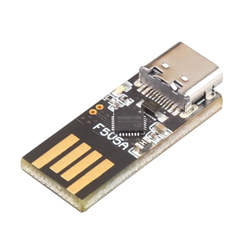
Based on this, we designed a USB-A to C adapter/decoy with 5V5A PD protocol, which is used to convert various common household devices with 5V output USB-A interfaces (such as power adapters or power modules) into USB-C interfaces that can complete 5V5A PD negotiation with Raspberry Pi 5, so that the Raspberry Pi 5 system does not pop up (does not prompt low power consumption), and the USB port is not limited to 600mA current.
Notice:
1)The actual current output capability depends on the USB-A power supply.
2)The CC cable must be a standard CC cable with both USB and CC signals to enable PD handshake with the Raspberry Pi 5. It cannot be a CC charging cable.
二、USB A-C PD adapter
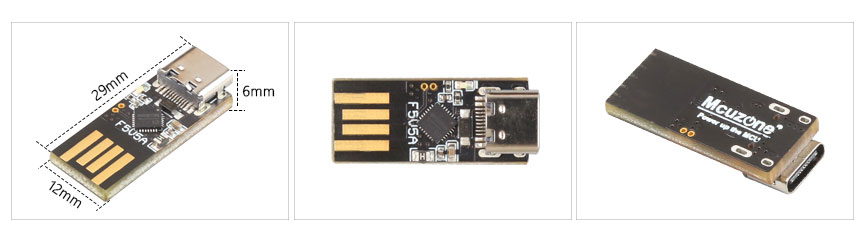
1. Employs a high-strength PCB design with a 2U thickness achieved through immersion gold plating.
2. This software converts a traditional USB-A port into a USB-C port with a 5V/5A PD protocol. It embeds the 5V/5A PD protocol required by Raspberry Pi 5, enabling PD handshake between all USB-A devices (power adapters, power modules, etc.) and the Raspberry Pi 5's USB-C port. This ensures that the Raspberry Pi 5 system operates without pop-up windows and that the USB port is not limited to 600mA current.;
3. USB-C supports reversible plugging.
4. The actual output capability depends on the output capability of the USB-A power adapter/power module's own A port.
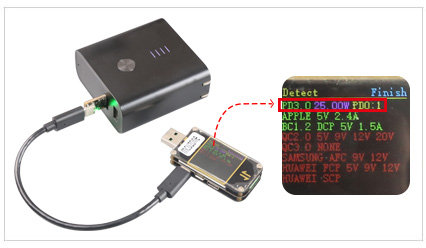
USB-A to C 5V5A PD decoy designed specifically for Raspberry Pi 5 - usage demonstration
Application scenarios:
1)A 5V power adapter (make sure it's 5V, regardless of the current) is required. The output port is a USB-A port with a USB A-C PD adapter for connecting to a Raspberry Pi 5. The system will not display any pop-up windows, and the USB port has no current limit.
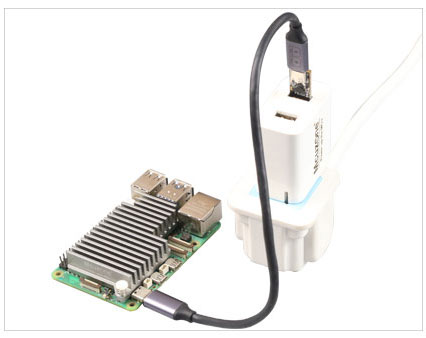
2)5V 5A power module, output port USB-A port with USB A-C PD adapter to connect to Raspberry Pi 5, no system pop-up window, USB port has no current limit.
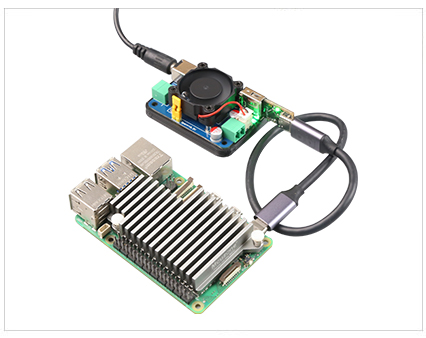
3)5V5A PD power module, output A port with USB A-C PD adapter to connect to Raspberry Pi 5, no system pop-up window, USB port has no current limit.
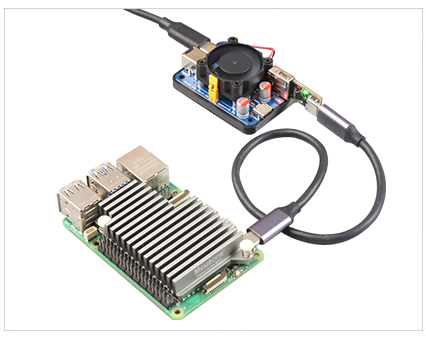
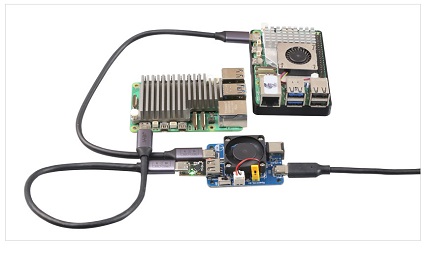
4)The RPi5_5V5A dual PD power module, equipped with a USB A-C PD adapter, allows one module to connect to two Raspberry Pi 5s simultaneously, sharing 5V5A, and the two Raspberry Pi 5s do not have pop-up windows in their respective systems, and the USB ports have unlimited current.
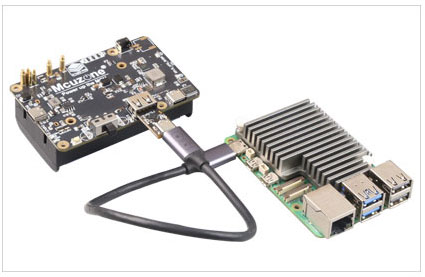
5)The 21700 5V5A PD power module has an output port A that can be connected to a Raspberry Pi 5 via a USB A-C PD adapter. The system does not display pop-up windows, and the USB port has unlimited current.
6)The 21700 5V 4A power module has an output port A with a USB A-C PD adapter for connecting to a Raspberry Pi 5, providing 3A of power without system pop-ups, and the USB port has unlimited current.
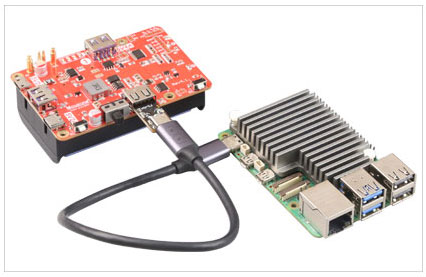
7)The 18650 5V 3A power module has an output port A with a USB A-C PD adapter for connecting to a Raspberry Pi 5, providing 3A of power without system pop-ups, and the USB port has unlimited current.
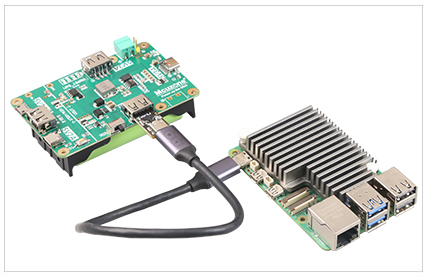
8)A 5V 3A supercapacitor powers the Raspberry Pi 5. It comes with a USB A-C PD adapter, and the Raspberry Pi 5 system does not display pop-up windows. The USB port has no current limit.
三、PD Dongle
The PD dongle is an adapter for 5V5A PD handshake with Raspberry Pi 5. It can prevent pop-up windows on the Raspberry Pi 5 system, allow unlimited 600mA current for the USB port, support reversible insertion of the USB-C port, and is compact in size, only 1*1cm, saving space. It is made with immersion gold process and lead-free production.
Application scenarios:
If the power supply is provided to the Raspberry Pi 5 via a power pin or PoE, a PD handshake cannot be established with the Raspberry Pi 5's power USB-C port. Therefore, a pop-up window will appear after the system starts, displaying a "low power" message, and the Raspberry Pi 5's USB port will be current-limited to 600mA. In this case, our PD dongle adapter can be plugged into the Raspberry Pi 5's power USB-C port to achieve a 5V5A PD handshake. The Raspberry Pi 5 will then support full-speed operation, and the USB current limit of the Raspberry Pi 5 will be relaxed from 600mA to 1.6A.
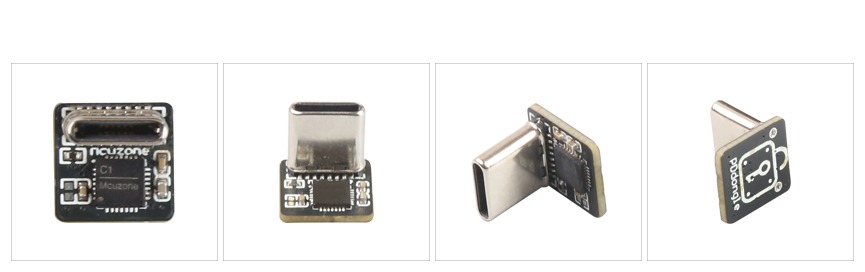
Precautions:
The PD dongle is only used for PD negotiation and handshake with the Raspberry Pi 5 and does not participate in power supply itself. The actual power supply capacity is determined by the pins or the PoE module itself.
The following is a demonstration of usage.:
1)The MPS2242-POE expansion board powers the Raspberry Pi 5 via PoE Ethernet. When used with a PD Dongle adapter, it enables PD handshake, allowing the Raspberry Pi 5 to run at full speed. At the same time, the USB current limit of the Raspberry Pi 5 will be relaxed from 600mA to 1.6A.
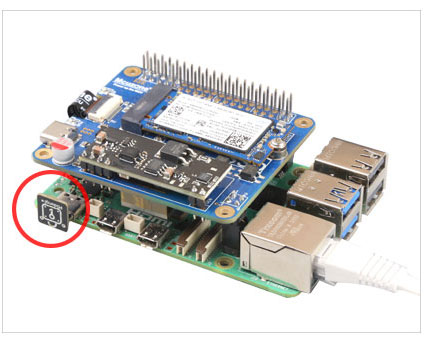
2)The MPS2280-POE expansion board powers the Raspberry Pi 5 via PoE Ethernet. With the PD Dongle adapter, PD handshake can be achieved, enabling the Raspberry Pi 5 to run at full speed. At the same time, the USB current limit of the Raspberry Pi 5 will be relaxed from 600mA to 1.6A.
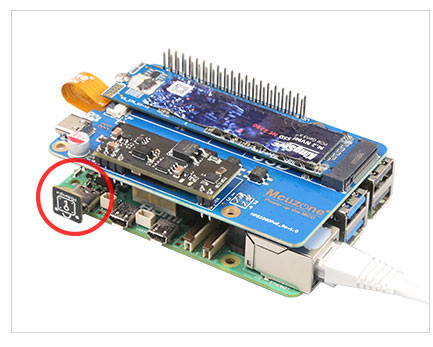
3)The MP2.5G-POE expansion board powers the Raspberry Pi 5 via PoE Ethernet. When used with a PD Dongle adapter, it enables PD handshake, allowing the Raspberry Pi 5 to run at full speed. At the same time, the USB current limit of the Raspberry Pi 5 will be relaxed from 600mA to 1.6A.
4)The 21700 5V5A PD power module pins power the Raspberry Pi 5. With the PD Dongle adapter, it can achieve 5V5A PD handshake, allowing the Raspberry Pi 5 to support full-speed operation. At the same time, the USB current limit of the Raspberry Pi 5 will be relaxed from 600mA to 1.6A.
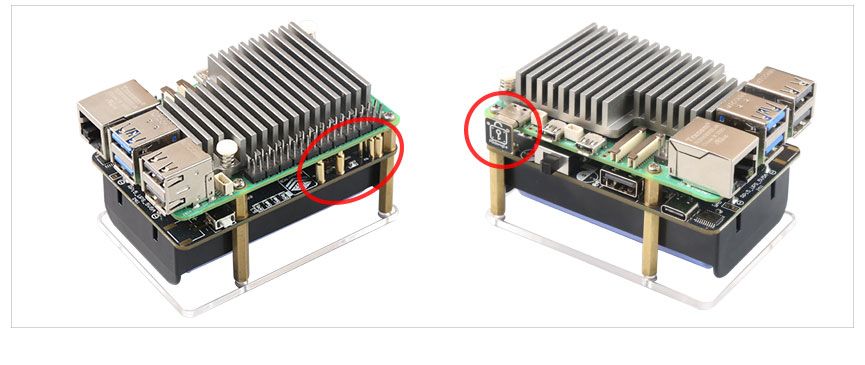
5)The 21700 5V3A power module pins power the Raspberry Pi 5 with a maximum current of 3A. When used with the PD Dongle adapter, PD handshake can be achieved, allowing the Raspberry Pi 5 to support full-speed operation. At the same time, the USB current limit of the Raspberry Pi 5 will be relaxed from 600mA to 1.6A.
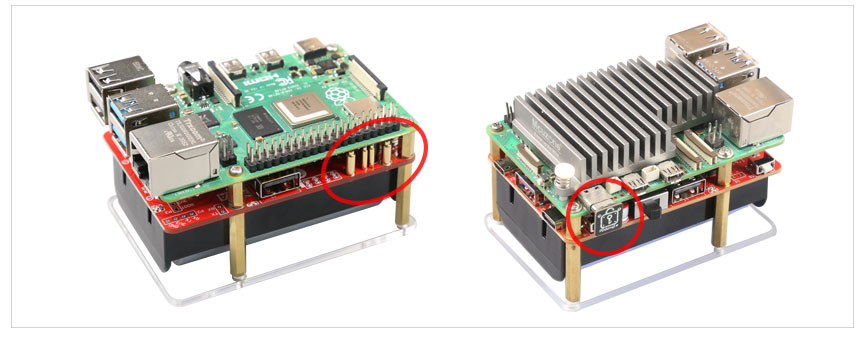
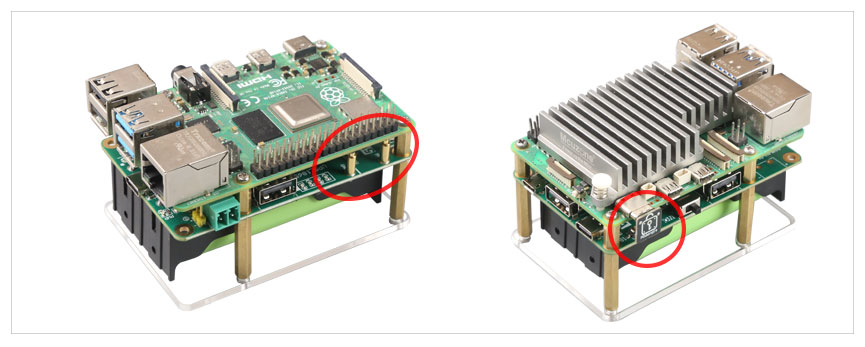
6)The 18650 5V3A power module pins power the Raspberry Pi 5 with a maximum current of 3A. When used with a PD Dongle adapter, PD handshake can be achieved, allowing the Raspberry Pi 5 to support full-speed operation. At the same time, the USB current limit of the Raspberry Pi 5 will be relaxed from 600mA to 1.6A.
Support
Monday-Friday (9:30-6:30) Saturday (9:30-5:30)
Email: services01@spotpear.com