


- sales/support
Google Chat:---
- sales
+86-0755-88291180
- sales01
sales@spotpear.com
- sales02
dragon_manager@163.com
- support
tech-support@spotpear.com
- CEO-Complaints
zhoujie@spotpear.com
- Only Tech-Support
WhatsApp:13246739196
- Purchase/Shipping/Refund
WhatsApp:13424403025
- HOME
- >
- ARTICLES
- >
- Common Moudle
- >
- ESP
T-Camera-S3-0.96inch User Guide
【Examples】
examples examples
├─AllFunction                       # Full function test
├─MinimalCameraExample              # Minimal camera example
├─MinimalPowersExample              # Minimal PMU operation example
├─MinimalScreenExample              # Minimal screen example
├─MinimalSoundDetectionExample      # Minimal ambient sound detection example
└─MinimalVoiceWakeupExample         # Minimal voice wakeup example
【Software】
- Installation VisualStudioCode and Python
- Search for PlatformIO plug-in in
VisualStudioCodeextension and install it. VisualStudioCodeneeds to be restarted after installation.- VisualStudioCode, select File in the upper left corner of VisualStudioCode-> Open Folder-> Select LilyGo-Cam-ESP32S3 directory.
- Click the platformio.ini file and cancel the sample lines to be used in the platformio column. Please ensure that only one line is valid.
- Click the (√) symbol in the lower left corner to compile.
- Connect the board to the computer USB.
- Click (→) to upload the firmware.
- Click (plug symbol) to monitor serial output.
- Use
AllFunctionandMinimalSoundDetectionExampleExample, need to upload additional model files, according to the following steps.- Click PlatformIO(bee icon) to the left of VisualStudioCode.
- Select
t-cameras3 - Select
Platform - After ensuring that the board is connected to USB, click
Upload Filesystem image
【Note】
- Can I use
Arduino IDE?AllFunctionandMinimalSoundDetectionExampleexample is not acceptable, because you need to upload model files and custom partition tables. At present, Arduino IDE does not support custom partition tables and uploading model files (the time for writing README is 20220930).- The remaining example is that Arduino IDE can be used.
- The board is integrated with PMU(Power management chip), which has short-circuit and overload protection. By default, PWRKEYneeds to press for 6 seconds to turn off the power supply of the board, and press PWRKEY for 128 milliseconds to turn on the power supply. If you need to modify the power-off pressing time, please refer to MinimalPowersExample.
- If the charging function is needed, the
PMUTS Pindetection function needs to be turned off. By default, there is no NTC sensor on board, so it is necessary to disable TS Pin detection in order to use the charging function normally. If the TS Pin detection function is not turned off, the PMU charging indicator light will blink after inserting the battery, and charging will be disabled at this time. - The external 5 Pin expansion socket of the board, 5V is shared with
PMUSYS, please do not externally connect an external power supply load larger than 600mA, and the 3.3V is powered by PMUDCDC3, and the voltage can be adjusted, and the maximum output current should not exceed 1A - All peripherals on board except OLED can turn off the power supply.
- When the sketch cannot be uploaded, please press and hold the BOOT button on the board, and then insert USB. At this time, you should be able to see the port in the device manager of the computer, and then click Upload Sketch again.
- When the power channel of ESP32S3 is turned off by mistake, please insert USB, then press and hold the BOOT button of the board, and then press and hold the PWRKEY button. At this time, the board enters the download mode, and the sketch can be uploaded normally.
- Please understand the risks before changing the peripheral voltage, otherwise, please do not try to change the voltage of the camera and other onboard equipment, which may cause permanent damage.
- When you think there is something wrong with the board, you can try to burn our factory firmware for testing, and you can rule out whether it is a hardware problem first. FactoryFirmware
【Pins】
Camera
| PWDN | Reset | XCLK | SDA | SCL | VSYNC | HREF | PCLK |
|---|---|---|---|---|---|---|---|
| N/A | 39 | 38 | 5 | 4 | 8 | 18 | 12 |
| D9 | D8 | D7 | D6 | D5 | D4 | D3 | D2 |
| 9 | 10 | 11 | 13 | 21 | 48 | 47 | 14 |
| OLED/PMU/PIR | SDA | SCL | PMU IRQ | PIR |
|---|---|---|---|---|
| 7 | 6 | 2 | 17 | |
| Microphone | WS | DATA | CLK | |
| 42 | 41 | 40 |
Power Channel:
| PMU Channel | Microphone | OLED | Camera | Pir |
|---|---|---|---|---|
| BLDO1 | DCDC1 | ALDO1/ALDO2/ALDO4 | ALDO3 |
TAG:
Computer
LuckFox
DeepSeek XiaoZhi AI Voice Chat Robot BOX ESP32-S3 Development Board 1.85 inch Round LCD N16R8
Raspberry Pi CM5 Official Original IO Board a Base Development Platform Compute Module 5 IO Board
Adjustable Focus
GPU Monitor Display
WIFI Configuration
Raspberry Pi CM5 Mini Base IO Board NANO A Development For Compute Module 5
Luckfox Pico ST7789
Raspberry Pi 5 PCIe FFC Connector to Standard PCIe x1 Slot (C) Expansion Board
WiFi Wireless ESP32 DDSM Motor Driver HAT For Direct Drive Servo Hub Motors For Raspberry Pi
Raspberry Pi 5 Serial
IO BASE MINI Board
DeepSeek AI Voice Chat ESP32-S3 Box N16R8 AUDIO Board Support External LCD/Camera AI deepseek
AV to RGB
1.33TFLOPS RAM-4G eMMC-16 High Performance AI at the Edge
Raspberry Pi 5 Camera User Guide
ESP32 Development Board WiFi+Bluetooth Ultra Low Power Dual Core ESP 32S ESP 32 Similar ESP8266
Raspberry Pi 5 Night Camera
Raspberry Pi 13.3 inch DSI MIPI Display 13.3inch LCD Capacitive TouchScreen 1920x1080
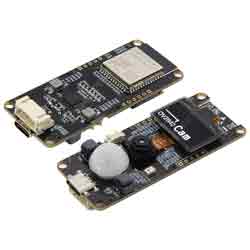
ESP32 S3 Development board T Camera S3 With 0.96inch OLED display screen OV2640Camera WiFi Bluetooth
TAG:
Raspberry Pi 5
Raspberry Pi PICO
Raspberry Pi 5 DSI Cable
Industrial Modbus RTU Dual Ethernet RJ45 To 8ch POE ETH Relay (C) PoE Power over Ethernet
Raspberry Pi 5 27W
Raspberry Pi 5 Official Active Cooler
Spotpear
AI Machine Vision Kit OAK D POE JPEG Encoder 12MP 4TOPS OpenCV Camera
ESP32-C6-MINI-1Support WiFi 6 Bluetooth 5 Zigbee Thread
Raspberry Pi 5 PCIe FFC Standard PCIe Slot
Raspberry Pi 5 Box Case PCIe USB3.2 Hub All Ports One Side
CM5 Cooling Fan 5V 3007 Raspberry Pi Compute Module 5
Raspberry Pi 3.5 inch DSI Display MIPI LCD (E) Capacitive TouchScreen 640x480
Raspberry Pi Pico 2 RP2350 Zero
Raspberry Pi 5 PCIe M.2 NVMe SSD Pi5 2230-Board mini
DeepSeek ESP32-S3 Voice Chat Robot 3.13 inch LCD
Raspberry Pi 4B PoE
ESP32-P4 Pico Development Board DB C5 MIPI DSI 10.1-inch Display /CSI Camera /Audio Speaker Mic AI Deepseek
ESP32-S3 A7670E 4G development board supports LTE Cat-1/2G/GNSS positioning/WiFi/Bluetooth
Industrial UART Converter USB RS232/485 FT232RNL Compact Size